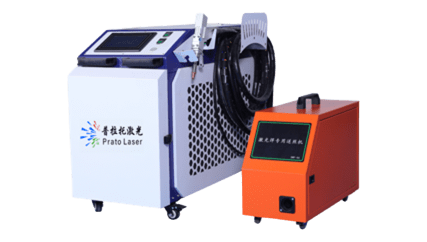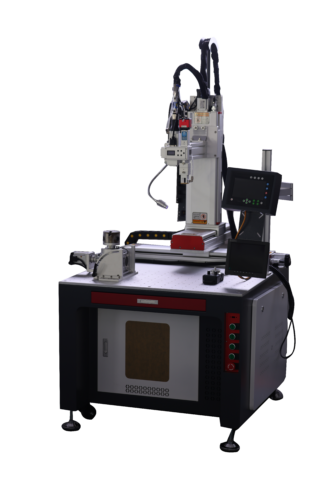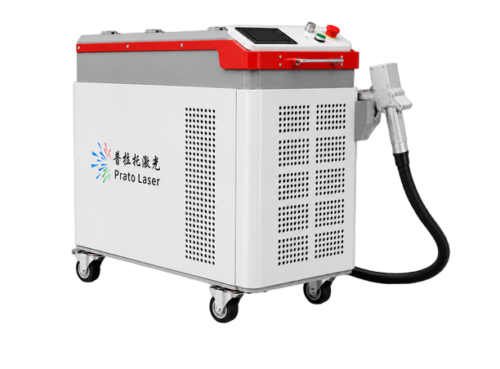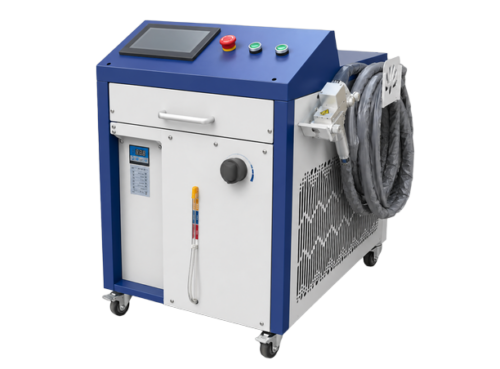


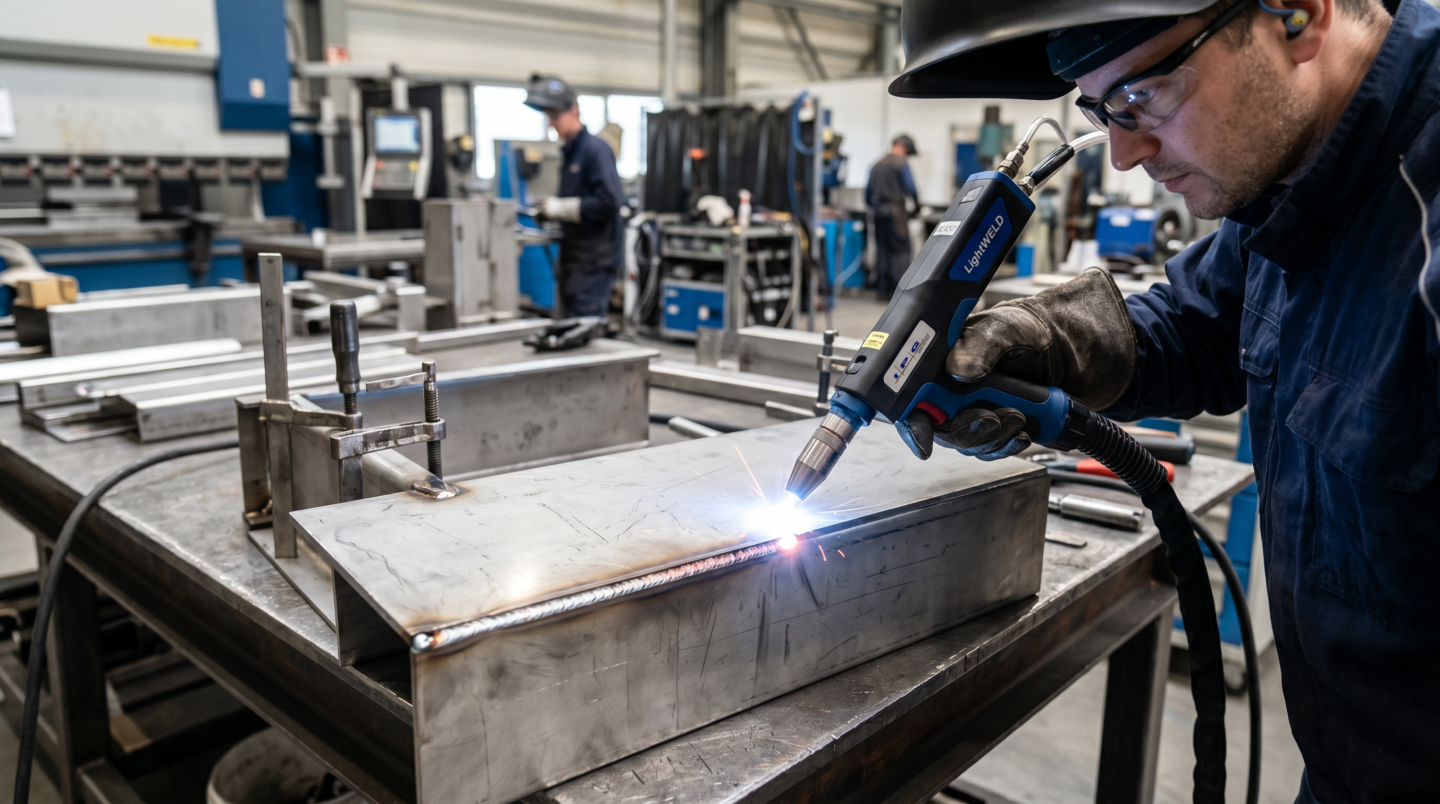
A handheld laser welder is becoming a more common choice for factories that need faster welding, cleaner seams, and lower dependence on highly skilled manual welders. In metal fabrication, automotive components, stainless steel products, and equipment manufacturing, many workshops are reviewing whether traditional TIG or MIG welding alone can still meet current delivery and quality demands.
This does not mean conventional welding is disappearing. TIG, MIG, and resistance welding still have important roles in heavy fabrication and specialized joints. The change is more practical. Factory owners are looking for tools that reduce rework, simplify training, and shorten production cycles.
For many small and medium-sized metalworking companies, handheld laser welding is no longer viewed as experimental equipment. It is increasingly treated as a production tool.
The strongest driver is not only speed. It is consistency.
Traditional welding depends heavily on operator experience. A skilled welder can deliver excellent results, but training takes time, and skilled labor is becoming harder to secure in many manufacturing regions. A handheld laser welder can help reduce that gap by offering a more stable welding process, especially for thin stainless steel, carbon steel, aluminum, galvanized sheet, and cabinet-type structures.
Metal fabrication companies are also under pressure to reduce visible weld defects. Products such as kitchen equipment, metal furniture, electrical enclosures, door frames, and decorative stainless steel parts often require clean weld seams. Excessive grinding or polishing adds labor cost after welding.
That is where laser welding has gained interest.
A focused laser beam produces a narrow heat-affected zone. In many applications, this means lower deformation, cleaner seams, and less post-weld finishing compared with traditional thermal processes.
Manufacturers evaluating industrial welding options can review Prato Laser’s Handheld Laser Welding Machine category for different machine configurations.
A handheld laser welder is most commonly adopted where welding appearance, production speed, and operator efficiency matter.
Typical applications include:
In sheet metal fabrication, the process is especially useful for thin and medium-thickness parts. Operators can weld corners, edges, seams, and structural joints with less heat distortion than many traditional methods.
One factory example is a stainless steel kitchen equipment manufacturer producing sinks, cabinets, and worktables. Before adopting laser welding, the company relied on TIG welding and manual polishing. The welding itself was not the only bottleneck. Grinding and surface correction consumed additional time. After switching part of the production to a handheld system, the factory reduced post-processing on visible seams and improved delivery consistency.
The result was not that TIG welding disappeared from the workshop. Instead, the factory used each process where it made sense.
A handheld laser welder offers several practical benefits.
The most obvious advantage is welding speed. For many sheet metal applications, laser welding can be faster than TIG welding. The weld seam is often narrower, and less heat enters the workpiece.
Another benefit is training time. Many operators can learn basic handling faster than traditional manual welding. This is useful for factories that need to expand production capacity without waiting months to train new welders.
There is also a quality advantage. Clean seams can reduce grinding, polishing, and rework. For stainless steel products, this can be a major cost factor.
Still, the technology has limits.
Joint fit-up matters. Laser welding works best when gaps are controlled and parts are prepared correctly. Poor fixtures, inconsistent gaps, or contaminated surfaces can reduce weld quality. The machine is not a substitute for good process control.
There are also safety requirements. Operators need suitable protective eyewear, controlled working areas, and training on laser hazards. Companies should follow recognized workplace safety guidance from OSHA and welding best practices from the American Welding Society.
One purchasing question is whether a factory should select an air-cooled or water-cooled system.
Air-cooled models are usually more compact and easier to move. They can be suitable for repair work, lighter production, and workshops with moderate welding hours.
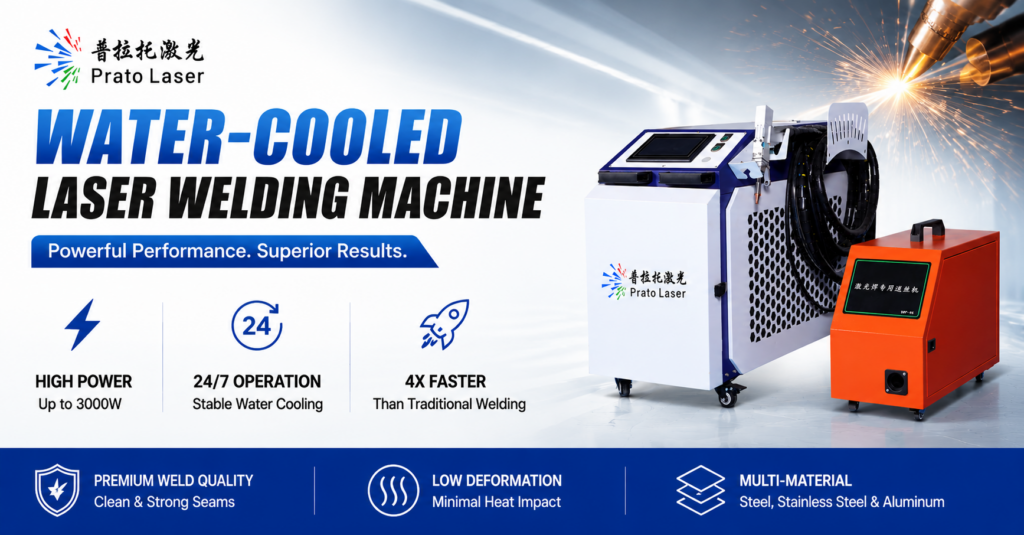
Water-cooled systems are designed for more continuous industrial use. For factories running longer welding shifts or processing thicker materials, a water-cooled handheld laser welder can provide better thermal stability.
The choice depends on the production environment.
A workshop that welds thin stainless steel parts for a few hours per day may not need the same configuration as a factory welding structural components across two shifts. Buyers should avoid selecting equipment only by power rating. Cooling design, welding gun quality, wire feeding stability, software control, and after-sales support all matter.
For users comparing dedicated water-cooled systems, Prato Laser’s Water-Cooled Handheld Laser Welding Machine page can be used as a reference product page.
One common misunderstanding is that a handheld laser welder can replace every welding method. It cannot.
Heavy structural welding, outdoor repair under poor fit-up conditions, and certain thick-section welds may still require traditional processes or hybrid workflows. Laser welding is highly effective when the application matches the process.
Another misunderstanding is that higher power always means better performance. In practice, excessive power can increase cost without improving the actual weld if the material thickness and joint design do not require it.
A third mistake is ignoring fixtures. Many buyers focus on the laser source but forget workholding. Stable clamping, accurate positioning, and clean surfaces are essential for repeatable weld quality.
Before purchasing a handheld laser welder, factory owners should define the real production requirement.
Important questions include:
Sample testing is strongly recommended. Buyers should send real parts, not only standard flat plates. A good sample test reveals how the machine performs with actual gaps, corners, surface conditions, and part geometry.
It is also useful to compare welding with post-weld cleaning. For stainless steel and coated materials, combining welding with surface treatment can improve final appearance. Related surface preparation equipment can be reviewed under Laser Cleaning Machine.
For B2B buyers, the value of a handheld laser welder is not limited to welding speed. The more important question is whether the machine improves the full workflow.
If laser welding reduces rework, lowers polishing time, shortens operator training, and stabilizes production quality, the return on investment can be meaningful. If the factory has poor part preparation, inconsistent designs, or low welding volume, the investment may be harder to justify.
The most suitable machine is not always the most expensive one. It is the system that matches the production process.
Manufacturers planning to compare machine configurations, power ranges, and application requirements can contact Prato Laser through Contact Us for project-based guidance.
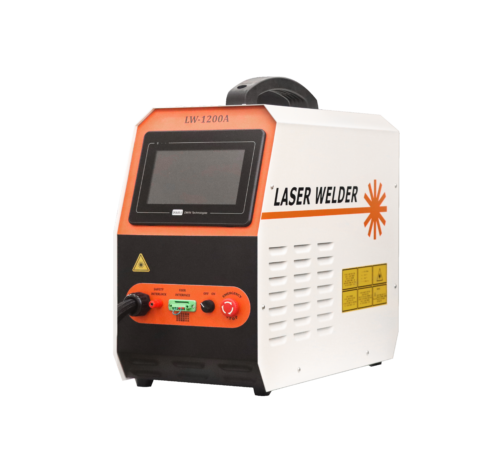
A handheld laser welder is a portable welding system that uses a focused fiber laser beam to join metal parts with high speed and low heat distortion.
Common materials include stainless steel, carbon steel, aluminum, galvanized steel, brass, copper, and some alloy materials.
For thin sheet metal and visible weld seams, it can be faster and cleaner than TIG welding. TIG remains useful for specialized welding tasks.
Basic operation can be learned faster than traditional welding, but operators still need training in safety, material preparation, and process control.
Water-cooled systems are better suited for continuous industrial production. Air-cooled systems are often preferred for lighter workloads and mobile use.
Common industries include sheet metal fabrication, automotive parts, kitchen equipment, metal furniture, door and window manufacturing, and architectural metalwork.

English