

For metal fabrication companies, laser cutter cost has become one of the most important questions before investing in new cutting equipment. Buyers are no longer looking only at the machine price. They also want to understand hourly operating cost, electricity use, cutting thickness, automation options, maintenance, and long-term return on investment.
As demand for faster and more precise metal processing continues to grow, fiber laser systems are becoming a practical choice for sheet metal factories, tube processing companies, machinery manufacturers, automotive parts suppliers, and job shops. Industry market research also shows continued growth in the global laser cutting machines market, which reflects stronger adoption of automated metal cutting equipment.
However, the real cost of a laser cutting machine depends on much more than the initial quotation. This article explains the key factors that affect laser cutter cost and how metal fabricators can evaluate the right machine for their production needs.
When buyers ask how much a laser cutter costs, they are usually thinking about the machine price. In industrial manufacturing, this is only one part of the total investment.
A complete laser cutting system may include the laser source, cutting head, machine bed, CNC control system, software, chiller, exhaust system, safety enclosure, exchange table, automatic loading system, tube cutting unit, installation, training, and after-sales service.
The basic laser cutting process uses a highly focused laser beam to cut materials with precision. In industrial production, the machine must also deliver stable motion control, reliable cooling, proper gas delivery, and safe operation.
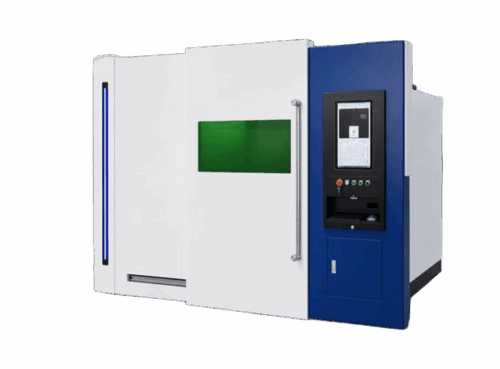
For this reason, two machines with the same laser power may have very different prices. A basic open-type sheet metal laser cutter will not cost the same as a fully enclosed system with an exchange table and automatic loading system.
The best way to evaluate laser cutter cost is to look at total value, not only the lowest purchase price.
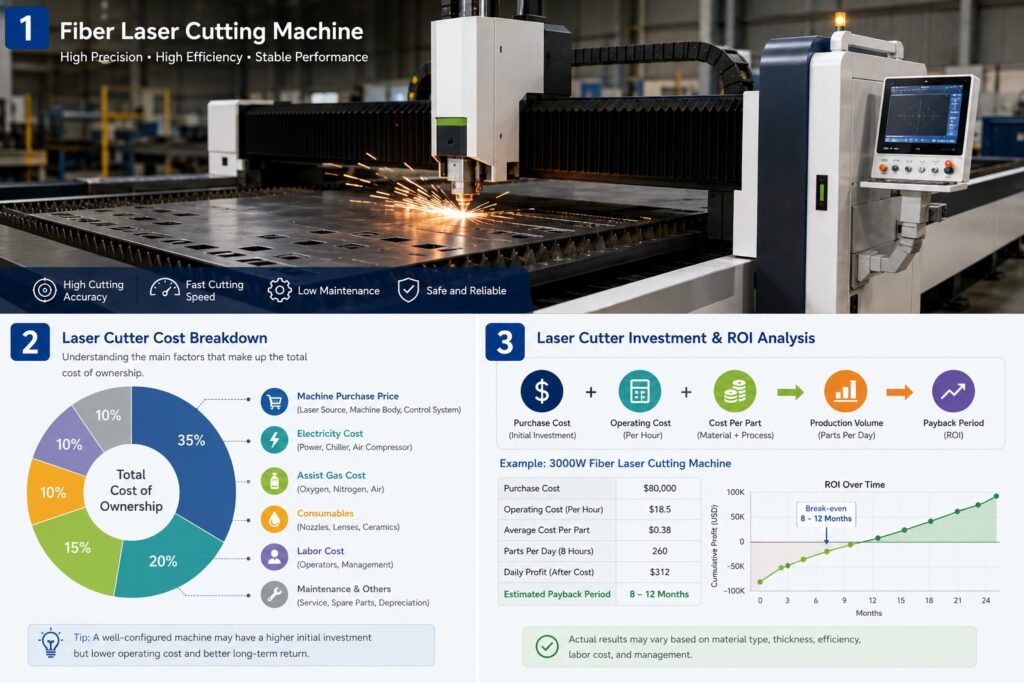
Laser power is one of the biggest factors affecting machine cost. Higher power allows the machine to cut thicker materials and improve cutting speed on medium and thin sheets. However, higher power also increases the investment in the laser source, cutting head, cooling system, machine structure, and electrical configuration.
For example, a company cutting thin stainless steel sheets may not need the same power level as a factory cutting thick carbon steel plates. Choosing too low a power can limit production capacity, while choosing too high a power may increase unnecessary investment.
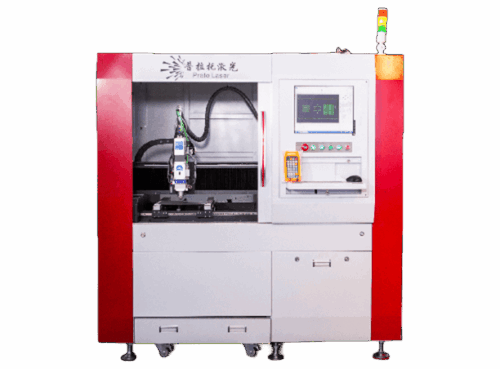
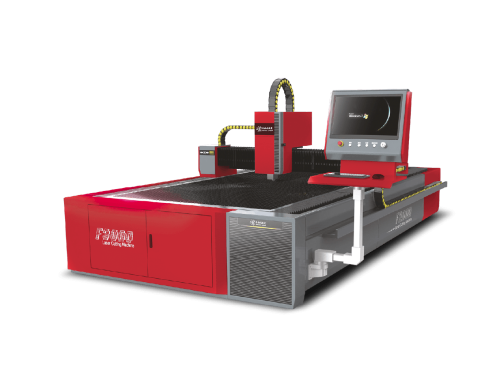
For buyers focused on standard sheet metal cutting, Prato Laser’s fiber laser cutting machine page is a useful reference for common working areas, materials, and power configuration options.
The material you cut also affects laser cutter cost. Carbon steel, stainless steel, aluminum, brass, and galvanized steel require different cutting parameters. Thickness also plays a major role.
A machine designed for thin sheet metal production may be different from a high-power machine used for thick plate cutting. If your factory processes both thin and thick materials, the machine configuration must balance cutting speed, edge quality, power, and budget.
Factories mainly processing flat plates, panels, brackets, cabinets, and enclosures can also review Prato Laser’s sheet metal fabrication application page to understand typical materials and production scenarios.
Before choosing a machine, buyers should clearly define their material type, maximum thickness, and daily cutting volume.
Different laser cutting machines are designed for different production needs.
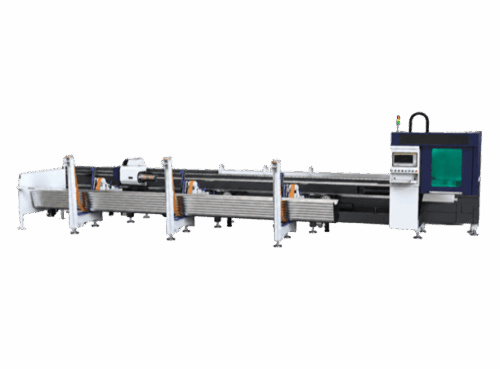
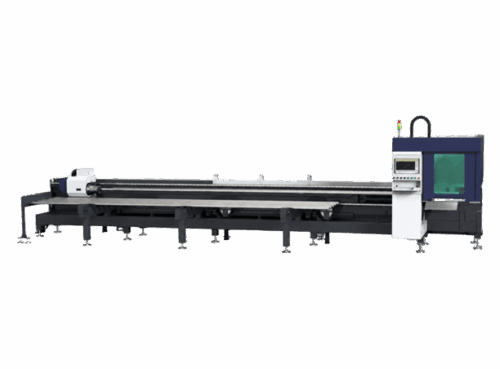
A sheet metal laser cutter is suitable for flat metal plates, panels, cabinets, brackets, enclosures, and sheet metal parts. A tube cutting machine is designed for round tubes, square tubes, rectangular tubes, and profiles. A combined sheet and tube system can process both sheets and tubes on one machine platform.
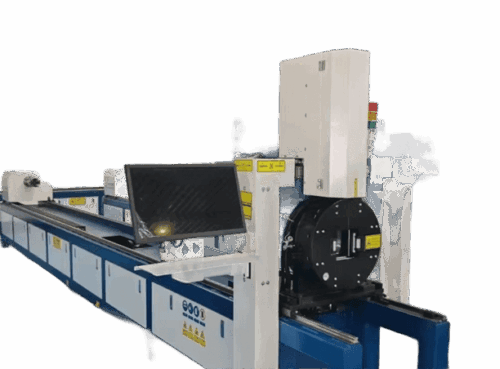
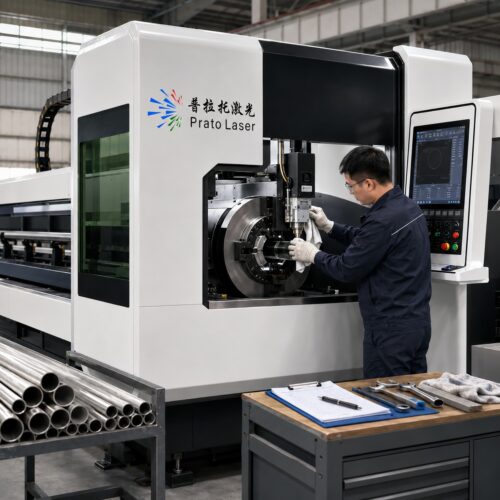
The machine type directly affects investment cost. A tube laser cutting machine usually requires chucks, tube feeding systems, pipe supports, and tube cutting software. A sheet laser cutting machine may require a large cutting bed, exchange table, or automatic sheet loading system.
If your main production is flat sheet processing, start with the Prato Laser laser cutting machine category. If your main workpieces are round, square, or rectangular tubes, the laser tube cutting machine category is more relevant.
Choosing the right machine structure is essential for controlling laser cutter cost.
The larger the working area, the higher the machine cost may be. Common sheet sizes include 3015, 4020, 6020, and larger customized formats. Tube laser cutting machines are often selected based on tube length, tube diameter, tube weight, and loading capacity.
Automation also affects price. Common automation options include:
Automation increases initial investment, but it can reduce labor cost, improve efficiency, and support continuous production.
For high-speed flat sheet production, a high-speed laser cutting machine may be suitable when production volume and cutting speed are more important than minimum initial cost. For tube processing, a fully automatic laser tube cutting machine can help reduce manual feeding and improve production consistency.
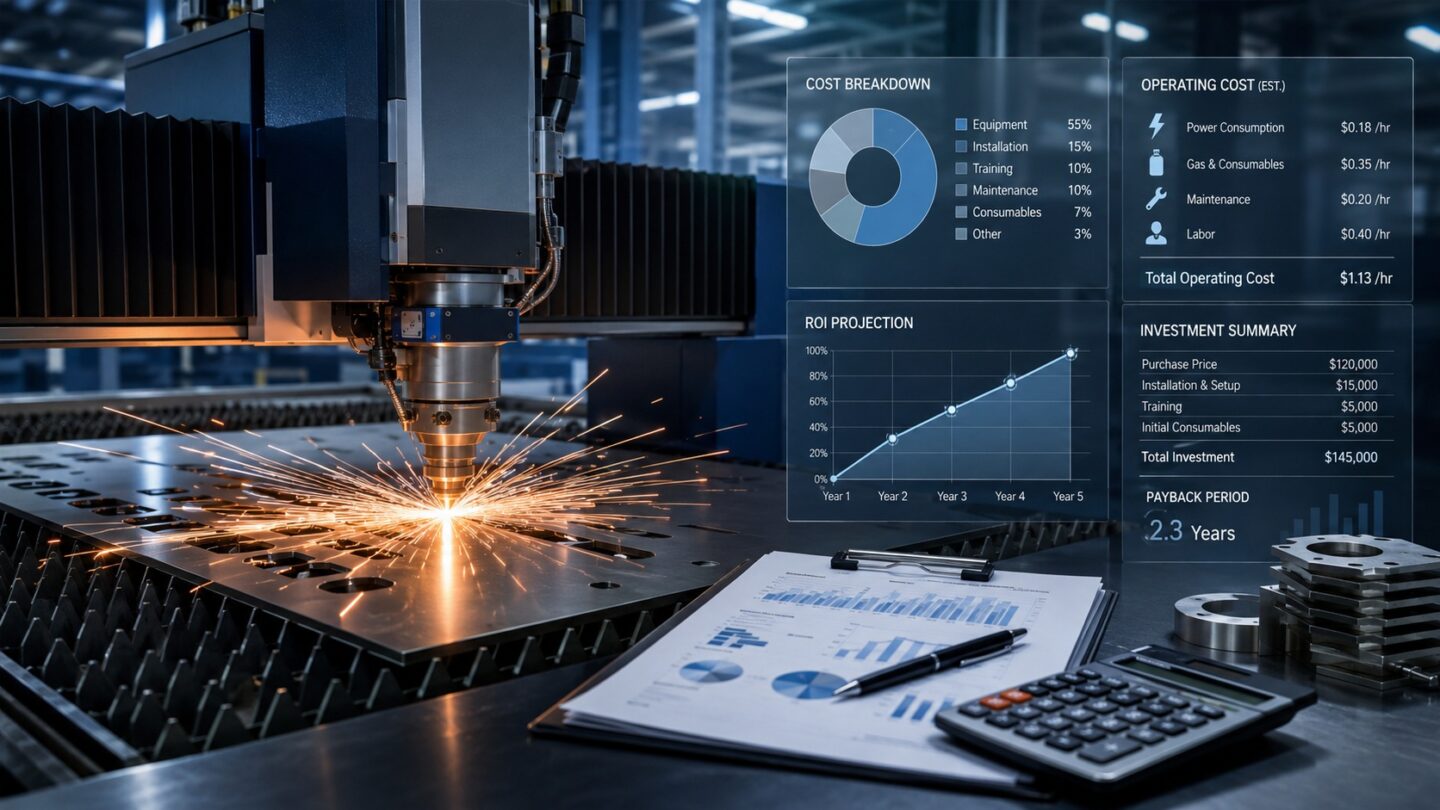
Hourly operating cost is another major concern for buyers. The cost per hour depends on electricity consumption, assist gas, consumables, labor, machine depreciation, and maintenance.
The main operating cost items include:
Assist gas and compressed air systems can strongly affect operating costs. The U.S. Department of Energy notes that better energy management and efficient equipment can help reduce compressed air system costs, which is relevant for factories using compressed air as an assist gas source or for auxiliary production equipment. Buyers can review DOE guidance on compressed air systems when evaluating workshop energy use.
For many factories, assist gas and electricity are important cost factors, but labor efficiency and production speed often have a bigger impact on long-term profitability. A faster and more automated machine may cost more at the beginning, but it can lower the cost per finished part when production volume is high.
Industrial laser cutting machines do use electricity, especially high-power fiber laser systems. However, actual electricity consumption depends on laser power, cutting speed, material thickness, machine utilization, chiller capacity, air compressor, and auxiliary equipment.
A machine does not always run at full power. During piercing, cutting, standby, loading, and unloading, power consumption changes. This is why buyers should evaluate electricity cost together with production efficiency.
A machine that cuts faster may consume more power per hour but less time per part. In real production, cost per finished part is usually more important than power consumption per hour.
Laser cutting can look expensive because the equipment requires advanced components and precise engineering. A fiber laser cutting machine includes a high-power laser source, precision motion system, stable machine bed, CNC control, cutting head, cooling system, software, and safety protection.
In addition, high-quality cutting requires stable beam delivery, accurate focusing, proper assist gas control, and reliable mechanical performance. These systems are designed for long-term industrial production, not simple occasional cutting.
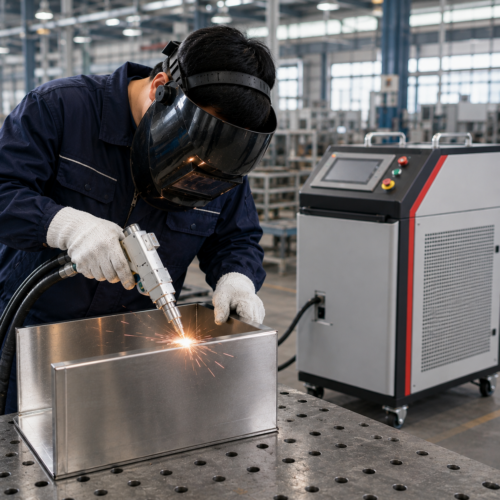
Industrial laser equipment should also be used with proper safety protection, operator training, machine enclosure, and risk control. OSHA provides information on laser hazards and standards, which buyers and factory managers can review when planning safe machine operation.
The higher upfront investment is often balanced by faster cutting speed, reduced secondary processing, better accuracy, lower labor dependency, and improved material utilization.
Laser cutting can be profitable when the machine matches the right production model. Profitability depends on order volume, material utilization, labor cost, cutting speed, machine uptime, and the ability to reduce secondary processes.
For job shops, laser cutting can create revenue from sheet metal parts, custom brackets, stainless steel components, carbon steel plates, signage, machinery parts, and tube structures. For manufacturers, the value often comes from internal efficiency, shorter delivery time, and better production control.
A factory should not evaluate profitability only by machine price. It should calculate how many parts the machine can produce per day, how much labor it can save, how much outsourcing it can replace, and how quickly it can support new orders.
For companies making machine frames, housings, panels, brackets, and structural parts, Prato Laser’s industrial equipment manufacturing application page gives a useful view of how laser processing fits into production workflows.
To control laser cutter cost, buyers should define their production requirements before asking for a quotation.
Important questions include:
If your production focuses on tubes, frames, guardrails, shelving, furniture structures, or machinery pipe components, Prato Laser’s pipe and tube processing page can help clarify typical applications. Buyers with lower tube production volume may compare a manual laser tube cutting machine with a semi-automatic laser tube cutting machine before investing in a fully automatic line.
Clear answers help suppliers recommend the right laser power, machine structure, automation level, and software configuration.
For industrial metal cutting, fiber laser cutting machines are now widely used because they offer high cutting speed, good accuracy, lower maintenance, and strong performance on carbon steel, stainless steel, aluminum, brass, and other metals.
CO2 laser systems are still used in some applications, especially for non-metal materials, but fiber laser technology is generally more suitable for modern metal fabrication. For companies mainly cutting metal sheets and tubes, fiber laser is usually the better investment.
Prato Laser provides fiber laser cutting solutions for different metal processing needs, including sheet metal laser cutters, tube laser cutting machines, and customized industrial laser equipment.
Our team can help customers evaluate laser cutter cost based on real production requirements, including material type, cutting thickness, machine size, automation needs, workshop space, and budget.
Whether your business focuses on sheet metal fabrication, tube processing, machinery manufacturing, automotive parts, electrical cabinets, metal furniture, or steel structures, Prato Laser can recommend a suitable configuration to improve cutting efficiency and control long-term production cost.
For machine selection, pricing support, and application review, you can contact Prato Laser to get a customized laser cutting machine solution for your factory. For installation, training, maintenance, and technical support information, you can also review the Prato Laser laser machine service and support page.
Laser cutter cost depends on laser power, machine type, working area, automation level, and application. Industrial fiber laser cutting machines are usually customized according to production needs, so the final price should be based on your material, thickness, and required configuration.
The hourly cost includes electricity, assist gas, consumables, labor, maintenance, and machine depreciation. The most important number is usually cost per finished part, not only cost per hour.
Industrial laser cutters require electricity for the laser source, chiller, exhaust system, control system, and auxiliary equipment. Actual consumption depends on power level, cutting parameters, material thickness, and machine utilization.
Laser cutting equipment uses advanced laser sources, precision motion systems, CNC controls, cutting heads, cooling systems, and safety protection. The investment is higher than some traditional cutting tools, but it can improve speed, accuracy, and production efficiency.
Laser cutting can be profitable when the machine is matched with enough production volume and suitable applications. Profitability depends on cutting speed, order demand, material utilization, labor savings, and machine uptime.
Cutting thickness depends on laser power, material type, assist gas, and cutting quality requirements. Higher-power fiber laser machines can cut thicker metals, but the best configuration should be selected according to your actual production needs.
For most industrial metal cutting applications, fiber laser cutting machines are preferred because they offer high speed, good precision, lower maintenance, and strong compatibility with common metals.

English