

For many metal fabrication companies, choosing between a laser rust removal service and buying an in-house laser cleaning machine has become a practical production decision. Rust removal is no longer only a maintenance task. In many factories, it affects welding quality, coating preparation, repair efficiency, labor cost, and delivery time.
A laser rust removal service can be useful for occasional jobs, large one-time projects, or companies that are still testing laser cleaning technology. However, for manufacturers with repeated rust removal, paint stripping, oxide cleaning, or surface preparation work, owning a laser cleaning machine may provide better workflow control and long-term cost advantages.
This article compares both options from a buyer’s perspective.
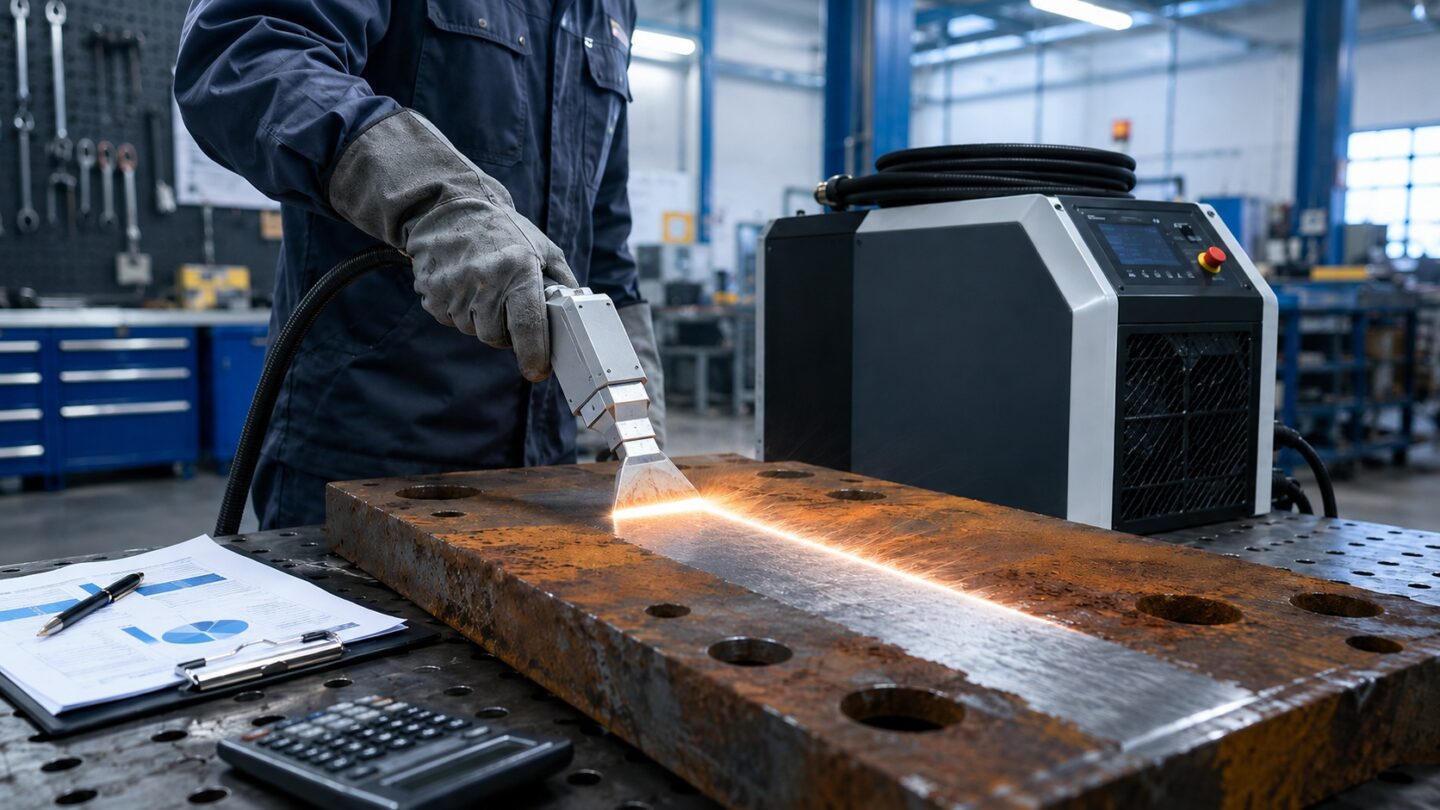
A laser rust removal service usually means hiring an external contractor or workshop to remove rust, paint, oxide layers, or surface contamination from metal parts using laser cleaning equipment.
Laser surface cleaning uses focused laser energy to remove contaminants from a surface. TWI explains that laser cleaning can remove material from the surface through laser energy and that removed material may become vapor or particulate matter collected by filtration systems. For more technical background, see this explanation of laser surface cleaning.
For companies that do not have frequent cleaning work, a laser rust removal service can reduce the need for immediate equipment investment. It may also help buyers understand whether laser cleaning is suitable for their materials before purchasing a machine.
Typical service applications include:
A laser rust removal service may be the right choice when rust removal is not part of daily production.
For example, a factory may only need to clean a batch of old steel parts once or twice a year. A repair workshop may receive occasional rusted components but not enough volume to justify buying equipment. A construction company may need surface preparation for one project but does not plan to build a dedicated cleaning workflow.
In these cases, outsourcing can reduce upfront investment. The buyer pays for the service instead of purchasing the laser source, cleaning head, cooling system, protective equipment, fume extraction, training, and maintenance support.
A service model also helps companies test cleaning results on real workpieces. This is important because rust thickness, coating type, base material, heat sensitivity, surface roughness, and cleaning speed can all affect the final result.
Buying a laser cleaning machine becomes more practical when rust removal is repeated, predictable, and directly connected to production efficiency.
For manufacturers that clean metal parts every week or every day, outsourcing can create hidden costs. Parts must be transported, scheduled, cleaned, inspected, and returned. If cleaning is needed before welding, coating, assembly, or repair, waiting for an outside service can slow down the entire workflow.
In-house equipment gives the factory more control. Operators can clean parts when needed, adjust parameters for different surfaces, and integrate cleaning into production.
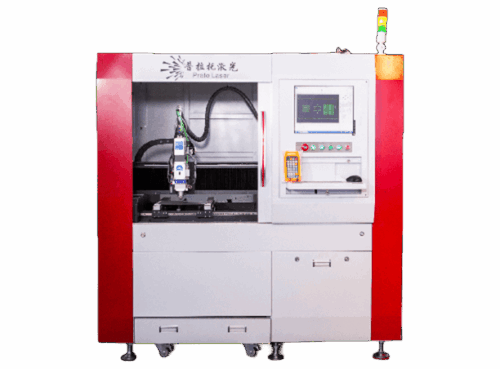
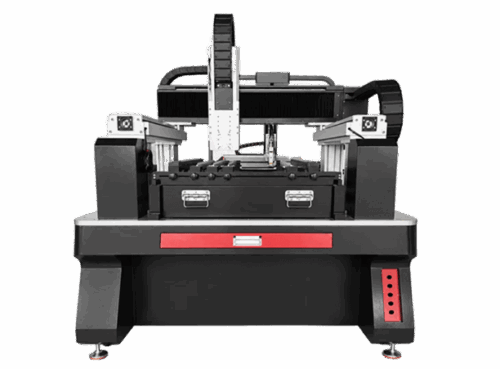
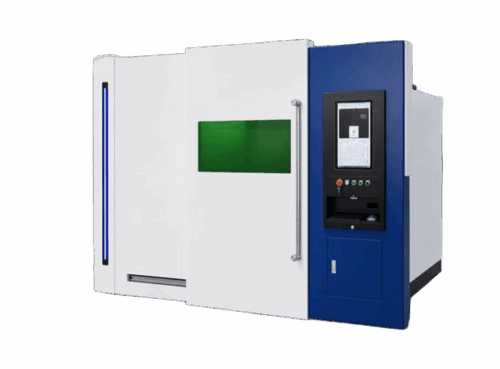
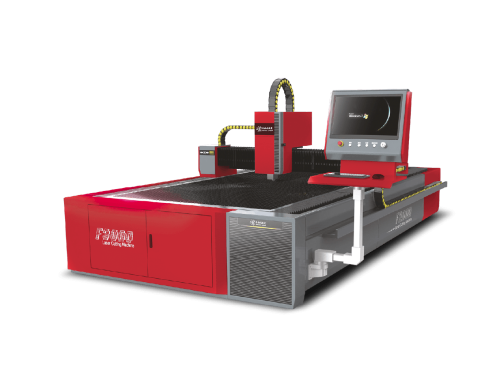
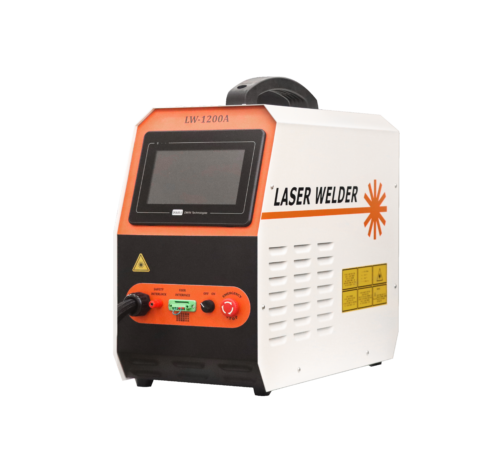
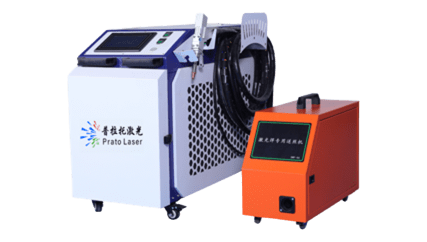
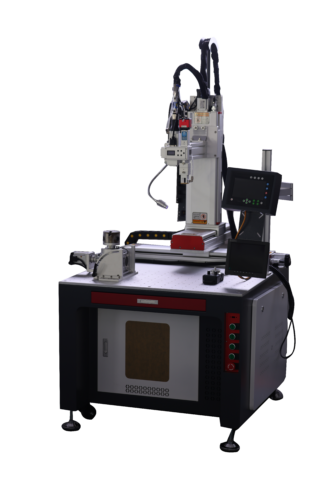
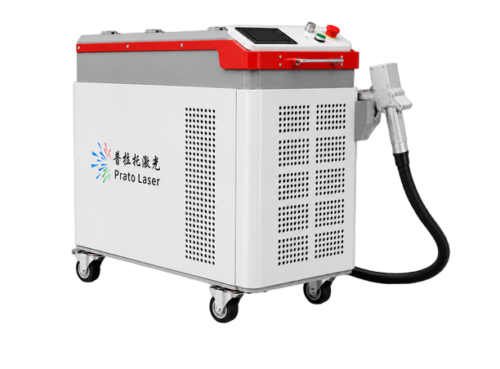
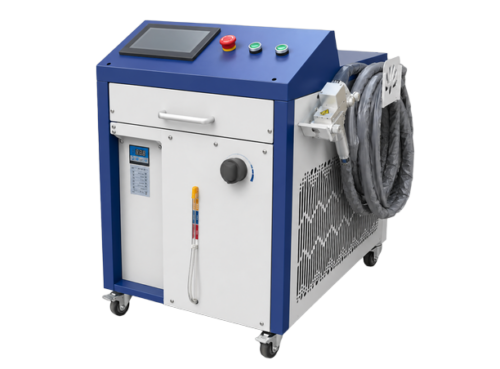
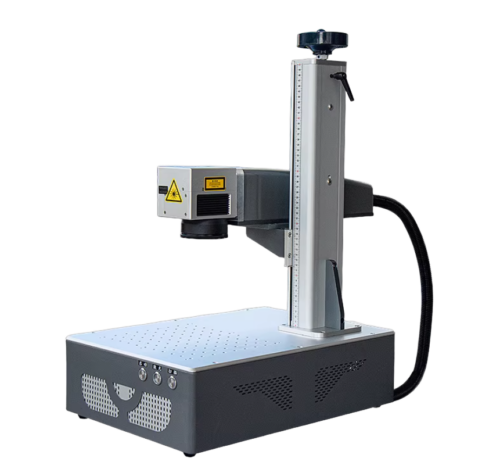
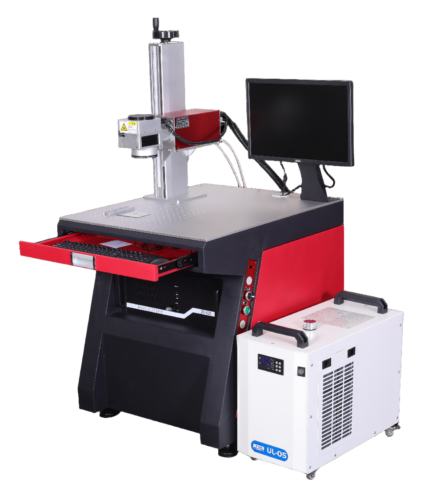
Companies reviewing equipment options can start with Prato Laser’s laser cleaning machine range, which includes pulsed and continuous wave laser cleaning machines for industrial rust removal, paint stripping, oxide cleaning, mold cleaning, and metal surface treatment.
| Factor | Laser Rust Removal Service | In-House Laser Cleaning Machine |
|---|---|---|
| Upfront Investment | Lower | Higher |
| Best For | Occasional or one-time cleaning | Repeated industrial cleaning |
| Workflow Control | Depends on service provider schedule | Controlled by your own team |
| Cost Structure | Pay per job or project | Machine investment plus operating cost |
| Flexibility | Limited by service availability | Flexible for daily production |
| Quality Feedback | Slower adjustment cycle | Faster testing and parameter adjustment |
| Long-Term ROI | Better for low volume | Better for recurring volume |
The key point is not whether a laser rust removal service is “better” or “worse.” The right choice depends on cleaning frequency, part size, rust level, labor cost, quality requirements, and production urgency.
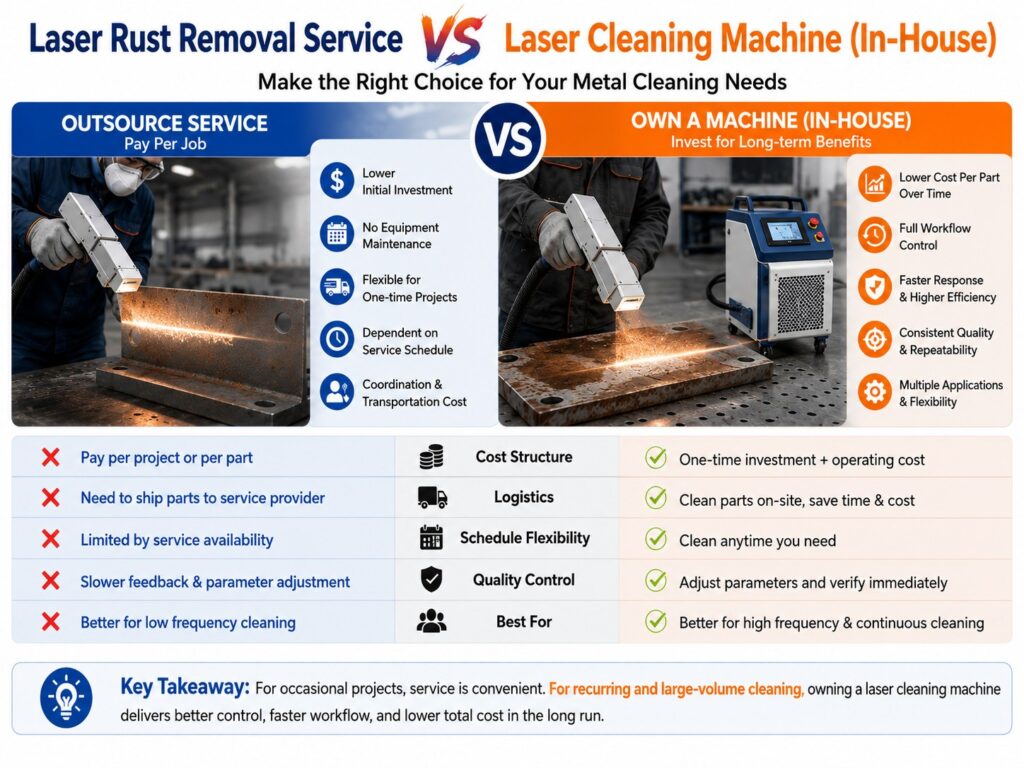
When comparing service and machine ownership, buyers should look beyond the quoted price.
For outsourcing, the total cost may include:
For machine ownership, the total cost may include:
Traditional methods such as abrasive blasting can also involve equipment, media, dust containment, and waste management. EPA’s AP-42 documentation describes abrasive blasting as a process using air pressure, centrifugal wheels, or water pressure to propel abrasive material toward the surface being cleaned. Buyers comparing cleaning methods can review the abrasive blasting process for additional context.
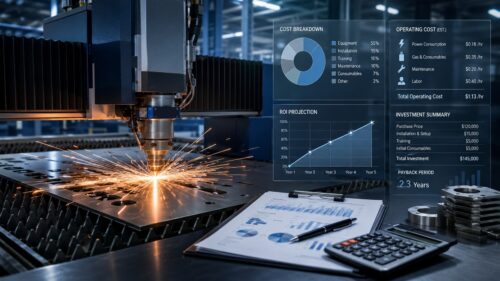
For factories with continuous cleaning work, the most important number is often not cost per hour. It is cost per cleaned part, including labor, waiting time, quality stability, and downstream production impact.
If a company decides to buy a machine instead of using a laser rust removal service, the next question is usually whether to choose pulsed or continuous wave laser cleaning.
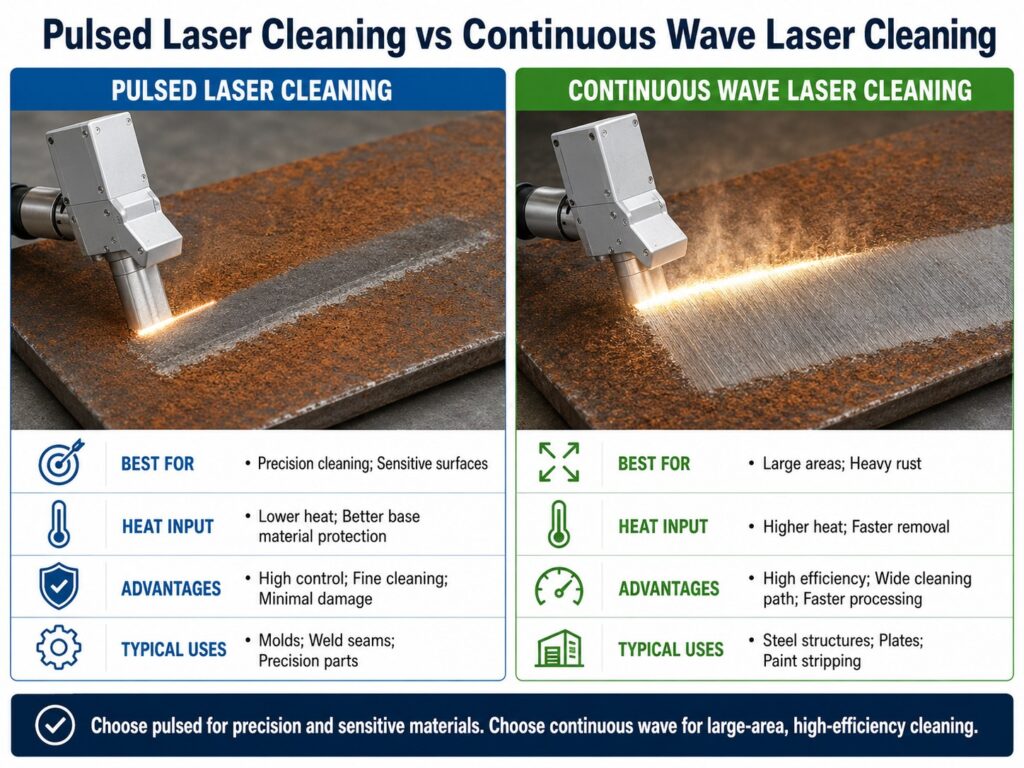
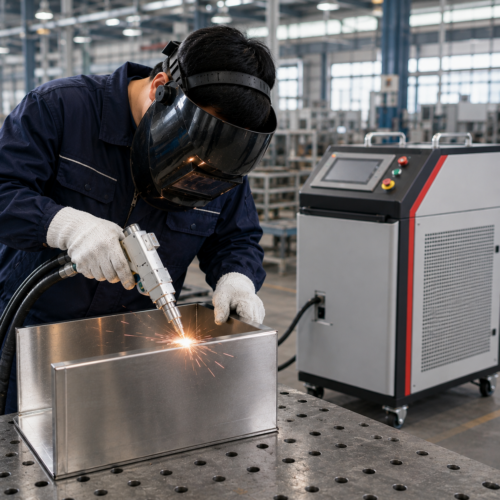
A pulsed laser cleaning machine is usually selected for more controlled cleaning, lower heat input, and better protection of the base material. It is suitable for precision parts, molds, weld seams, delicate surfaces, and high-value components.
A continuous wave laser cleaning machine is usually selected for high-efficiency cleaning on larger metal surfaces. It is more suitable for heavy rust removal, large-area paint stripping, steel structures, tanks, plates, machinery parts, and maintenance applications.
For sensitive surfaces, pulsed cleaning may be more appropriate. For large-area industrial rust removal, continuous wave cleaning may offer better efficiency.
Whether using a service provider or operating equipment in-house, laser cleaning requires proper safety management.
Industrial laser equipment should be operated with suitable enclosure, eyewear, warning signs, fume extraction, training, and process control. ISO 11553-1 covers safety requirements related to laser radiation hazards for laser processing machines. Buyers can refer to ISO 11553-1 laser processing machine safety requirements when reviewing machine safety considerations.
OSHA also provides information on laser hazards and standards, including general industry references for workplace laser hazards.
Safety planning should be considered before equipment installation, not after production begins.
In-house laser cleaning is often more suitable for companies that regularly process metal parts and need consistent surface preparation.
Common industries include:
For example, companies working with cabinets, enclosures, panels, brackets, and steel parts can review Prato Laser’s sheet metal fabrication applications to understand where laser equipment fits into production. Manufacturers producing machine frames, equipment housings, structural parts, and customized machinery components can also explore industrial equipment manufacturing solutions.
For steel frames, plates, beams, and large structures, the construction and steel structure projects page is also relevant.
A laser rust removal service is usually suitable when:
Buying a laser cleaning machine is usually suitable when:
Before making a decision, buyers should prepare real samples, rust level photos, material information, coating details, cleaning area, target cleaning speed, and quality requirements.
Prato Laser provides industrial laser cleaning equipment for rust removal, paint stripping, oxide cleaning, mold cleaning, weld seam cleaning, and metal surface preparation.
Our team can help buyers compare pulsed and continuous wave laser cleaning options based on material type, rust level, surface sensitivity, cleaning area, production frequency, and budget. For customers evaluating machine ownership, Prato Laser also provides laser machine service and support covering machine recommendation, installation guidance, operator training, maintenance guidance, and technical support.
To discuss your rust removal application, cleaning samples, machine configuration, and quotation requirements, you can contact Prato Laser for project-based machine selection guidance.
A laser rust removal service can be a practical option for occasional cleaning projects, small batches, or companies testing laser cleaning technology. However, when rust removal becomes part of regular production, buying an in-house laser cleaning machine may provide better cost control, faster workflow, and more consistent quality.
The best decision depends on cleaning frequency, part size, rust level, production schedule, safety requirements, and long-term return on investment.
For metal fabrication businesses, the question is not only “How much does cleaning cost?” The better question is: “Which option gives us better production control and lower total cost over time?”
A laser rust removal service is better for occasional or one-time cleaning projects. Buying a machine is usually better for factories with repeated rust removal, paint stripping, or surface preparation needs.
The cost depends on rust level, cleaning area, part size, material type, surface quality requirements, labor, and whether the work is outsourced or done in-house. For machine ownership, buyers should calculate cost per cleaned part, not only machine price.
Continuous wave laser cleaning is often used for large-area rust removal and paint stripping. Pulsed laser cleaning is preferred for precision cleaning, lower heat impact, and sensitive surfaces.
Yes. Laser cleaning can remove rust, oxide layers, selected paints, coatings, and surface contaminants. Actual results depend on coating type, thickness, laser power, process parameters, and base material.
With proper parameters, laser cleaning can remove surface contamination while reducing mechanical damage to the base material. Sensitive surfaces usually require more controlled parameter settings and may be better suited for pulsed laser cleaning.
Laser cleaning can reduce abrasive media and some types of secondary waste, but it still requires strict laser safety protection, fume extraction, operator training, and controlled working conditions.
Yes. Sample testing is strongly recommended. Real workpieces help confirm cleaning speed, surface quality, heat effect, and whether pulsed or continuous wave laser cleaning is more suitable.

English