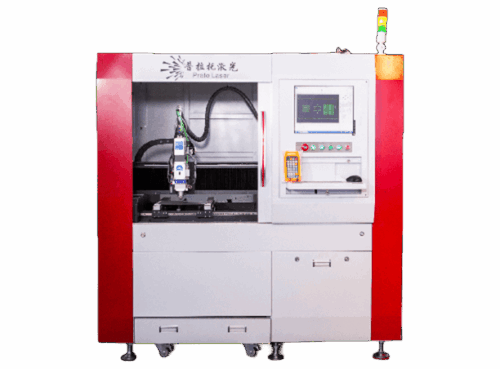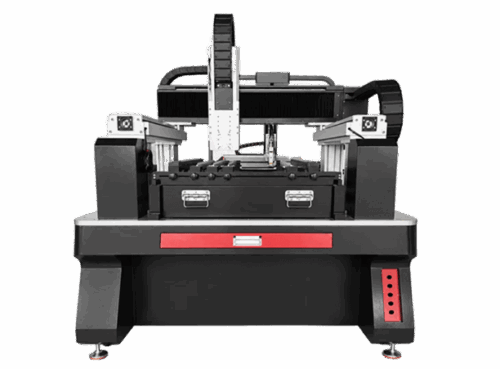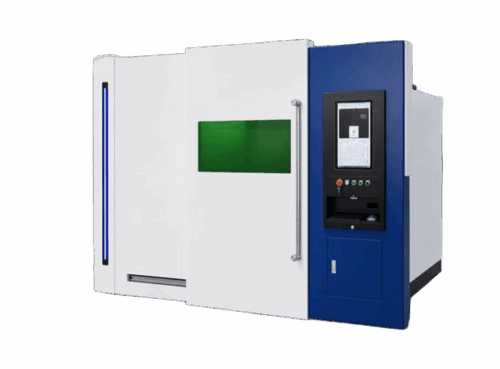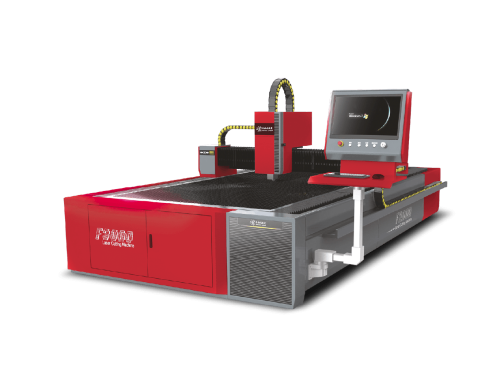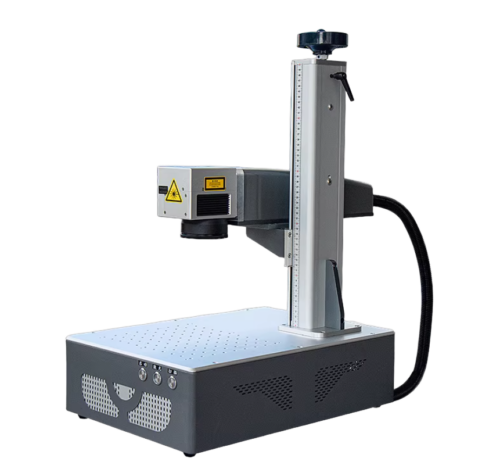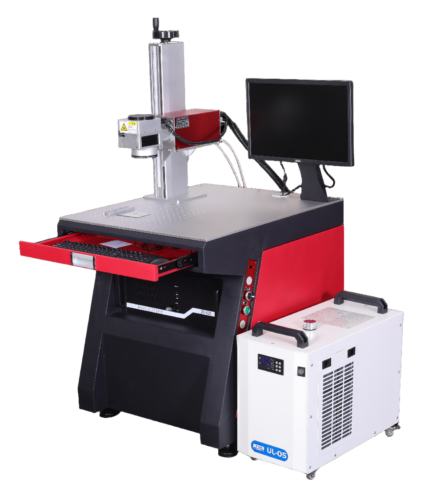


Fiber Laser Stainless Steel cutting is a common requirement in sheet metal workshops, kitchen equipment factories, elevator part suppliers, decoration manufacturers, and many precision fabrication plants. Stainless steel looks simple to cut, but in real production, buyers often care about more than whether the machine can “cut through” the material.
Edge color, burr control, cutting speed, gas cost, part accuracy, and long-term machine stability all affect the final result. A fiber laser cutting machine can help stainless steel manufacturers improve production efficiency, but the right configuration should match the actual thickness range and product quality standard.
This guide explains the main points buyers should check before choosing a stainless steel laser cutting solution.
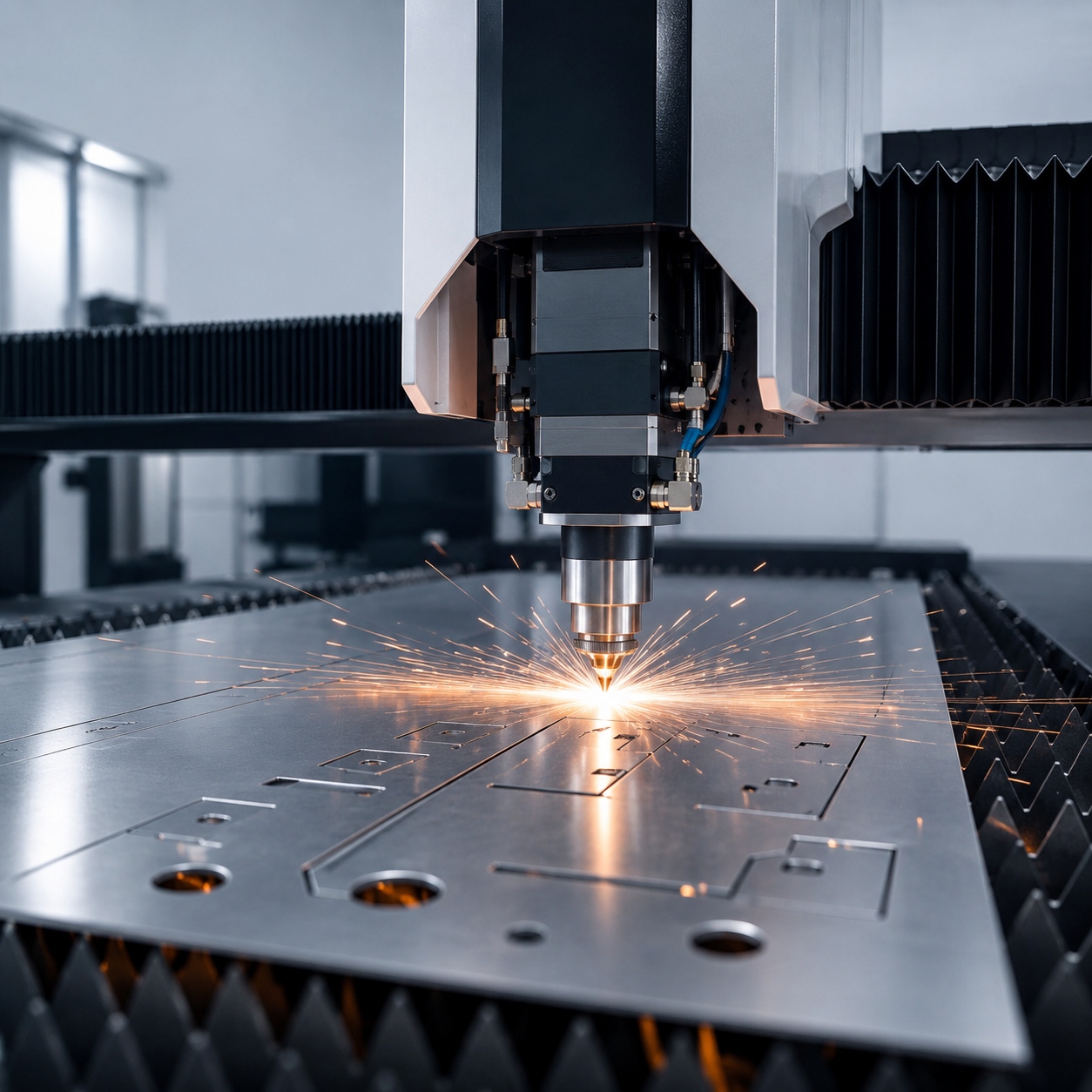
Fiber Laser Stainless Steel cutting uses a focused laser beam to melt and separate stainless steel along a programmed cutting path. CNC software controls the process, allowing the machine to cut straight lines, curves, slots, holes, and complex part shapes with good repeatability.
For stainless steel fabricators, this is useful because many products need both appearance and accuracy. Elevator panels, kitchen cabinets, decorative screens, machinery covers, and electrical enclosures often require clean edges and stable dimensions.
Compared with mechanical cutting or plasma cutting, fiber laser cutting usually creates a narrower kerf and reduces the need for secondary processing. For many workshops, this means less grinding, faster delivery, and better consistency between batches.
Stainless steel is widely used because it is strong, corrosion-resistant, and suitable for visible products. However, it is also a material where cutting quality is easy to notice. A rough edge, yellow cutting mark, or visible burr can affect the appearance of the final product.
This is one reason many factories choose Fiber Laser Stainless Steel processing. With the right laser power, assist gas, focus setting, and cutting speed, the machine can produce clean parts with accurate shapes.
Another reason is flexibility. A workshop may cut cabinet panels in the morning, decorative screens in the afternoon, and small brackets the next day. A laser cutting machine can switch between different drawings without making special molds. This is helpful for factories that handle both batch orders and customized work.
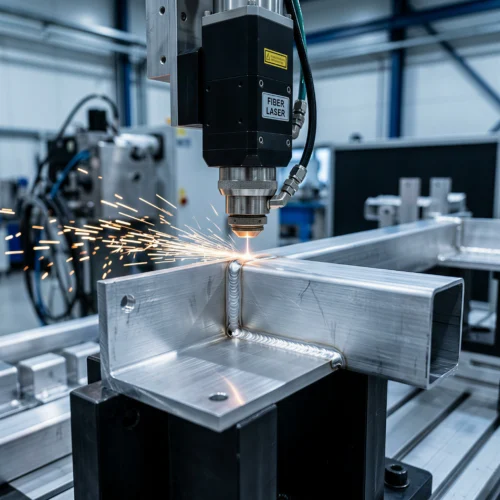
For stainless steel parts that need welding after cutting, stable edge quality is also important. Better cutting accuracy can improve fit-up and reduce rework during assembly.
Fiber Laser Stainless Steel cutting gives factories several practical advantages in daily production.
Speed comes first, especially when the factory cuts thin and medium-thick stainless steel sheets. With a suitable machine configuration, operators can finish many jobs faster than with traditional cutting methods.
Edge quality also matters. Many stainless steel products appear in visible areas, so cleaner edges can reduce polishing work and improve the final appearance.
Repeatability is another important benefit. Once operators set stable cutting parameters, the machine can produce the same part again and again with consistent size and shape.
Proper nesting software can also improve material utilization. It helps factories arrange parts more efficiently on each sheet and reduce waste.
For buyers, these advantages only create value when the machine matches the real application. A small machine may slow down production, while an oversized machine may increase both investment and operating cost.
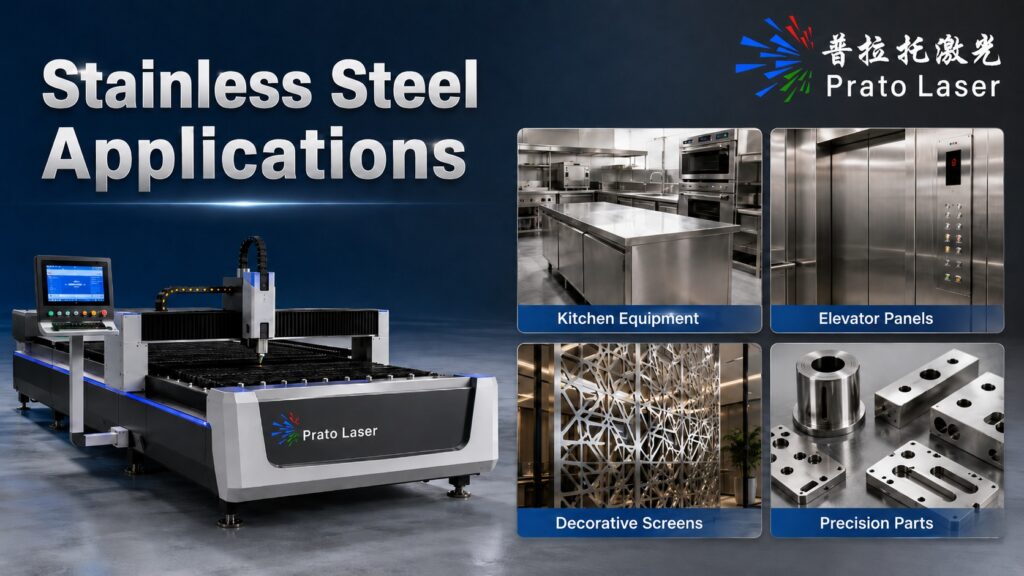
Fiber laser cutting is suitable for many stainless steel products. Common applications include kitchen equipment, commercial cabinets, elevator panels, decorative screens, door and window parts, machinery covers, electrical boxes, advertising signs, brackets, and precision sheet metal parts.
Decorative stainless steel products often require a clean cutting surface and good edge appearance. For industrial parts, accuracy and production stability may be more important. When components need welding after cutting, consistent edges can help improve assembly quality.
Because each application has different requirements, buyers should not choose a machine only by looking at maximum cutting thickness. It is better to start with the stainless steel thickness used most often in daily production.
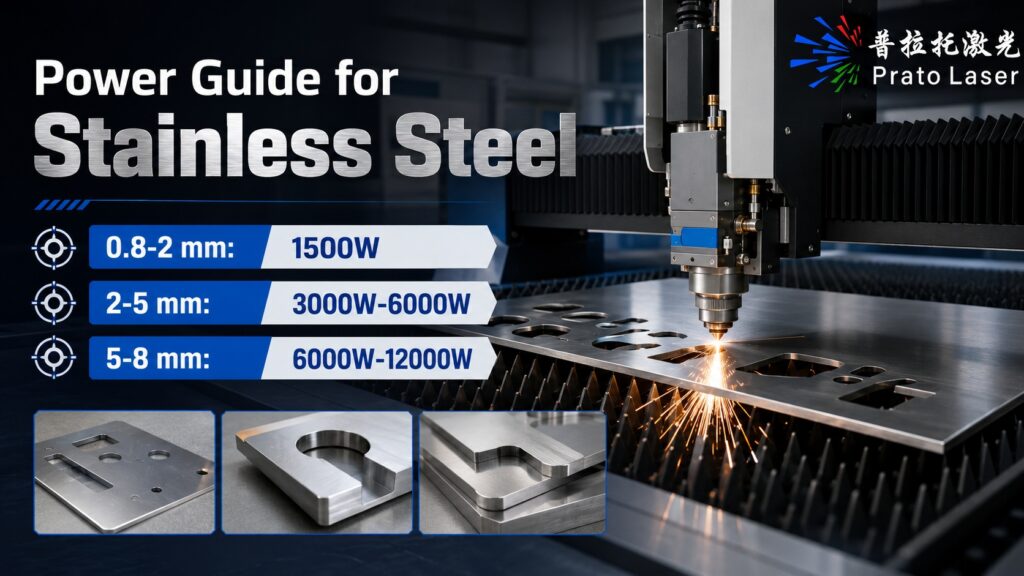
Buyers should choose laser power according to real production needs. Many buyers first ask about the thickest plate a machine can cut, but that number does not always show practical daily performance.
For thin stainless steel sheets, 1500W can be a cost-effective choice. When a factory often cuts 2–5 mm stainless steel, 3000W–6000W usually gives a better balance of speed and stability. If the production involves thicker stainless steel plates or high-volume cutting, buyers should evaluate 6000W–12000W.
A useful rule is simple: choose the machine for the thickness you cut every day, not only for the thickness you may cut occasionally.
For a broader view of laser cutting power selection, buyers can also refer to this external guide from The Fabricator on laser cutting power.
The following table can be used as a general reference:
| Stainless Steel Thickness | Suggested Laser Power | Typical Use |
|---|---|---|
| 0.8–2 mm | 1500W | Thin sheet products, decoration, light fabrication |
| 2–3 mm | 3000W | Cabinets, panels, kitchen equipment, general parts |
| 3–5 mm | 3000W–6000W | Machinery covers, brackets, industrial components |
| 5–8 mm | 6000W–12000W | Medium-heavy stainless steel production |
| Above 8 mm | 12000W or higher | Thick plate cutting, sample testing recommended |
These values are not fixed rules. Stainless steel grade, surface finish, gas type, nozzle condition, part shape, and cutting speed can all change the final result. Before confirming a machine, sample cutting is still the safest method.
Assist gas has a direct influence on stainless steel cutting quality.
Factories commonly use nitrogen when the product needs a cleaner and brighter edge. It helps reduce oxidation and is suitable for visible stainless steel parts, such as kitchen equipment, elevator panels, decorative parts, and high-quality sheet metal products.
Air cutting can reduce gas cost in some applications. However, the edge finish may not be as clean as nitrogen cutting. For products where the edge will be hidden, welded, painted, or processed again, air cutting may still be acceptable.
The best choice depends on the final product. If appearance is important, nitrogen is usually the safer option. If cost control is more important and edge color is acceptable, air cutting can be tested.
Some buyers only process flat stainless steel sheets. In that case, a sheet metal fiber laser cutting machine is usually the right choice.
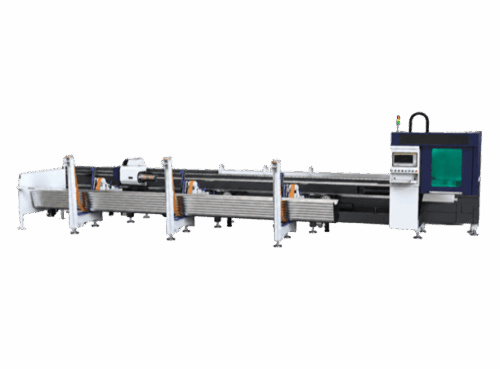
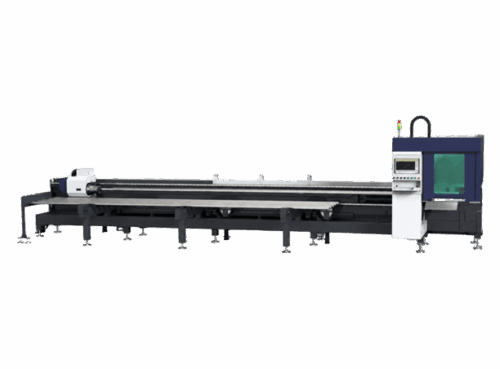
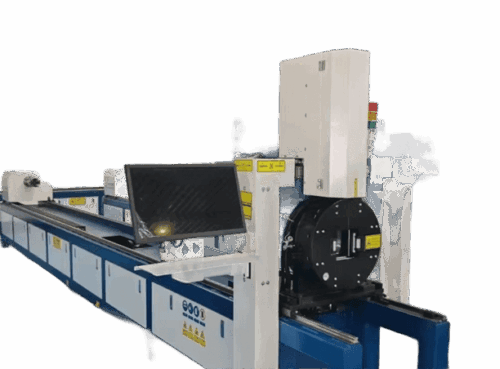
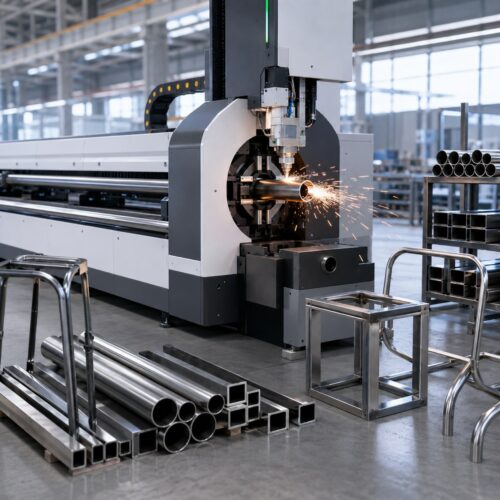
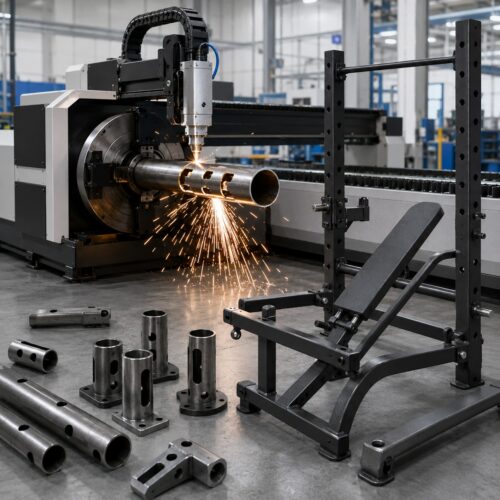
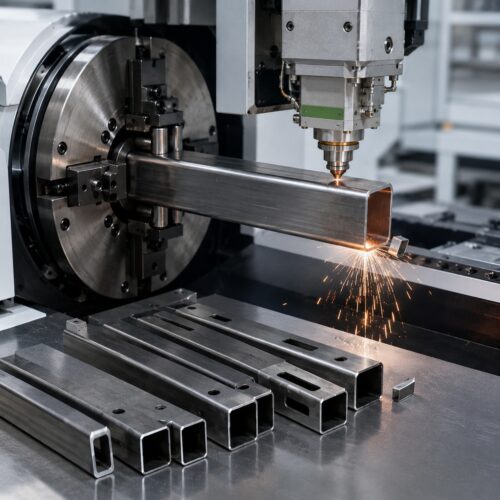
Other factories cut stainless steel tubes, including round tubes, square tubes, rectangular tubes, and shaped profiles. For these applications, a laser tube cutting machine is more suitable.
The difference is important. A sheet cutting machine is designed for flat plate processing, while a tube cutting machine is built for pipe and profile cutting. Buyers who are comparing these two options can also read this guide: Tube Cutting Machine vs Sheet Cutter.
If both sheets and tubes are common in daily production, the factory may need a combined sheet-and-tube solution or separate machines to improve efficiency.
When buying a machine for Fiber Laser Stainless Steel cutting, laser power is only one part of the decision.
Buyers should also check the laser source, cutting head, CNC control system, machine bed, guide rail, rack, servo motor, reducer, cooling system, dust removal system, and after-sales support.
A stable machine structure helps maintain accuracy during long working hours. A reliable cutting head makes parameter adjustment easier and protects the optical system. A good control system can also reduce operator learning time.
For factories with regular stainless steel orders, machine stability is often more important than a small price difference. A lower-priced machine may look attractive at first, but unstable cutting quality can increase waste, rework, and downtime.
Stainless steel cutting problems usually appear as burrs, yellow edges, rough cutting surfaces, incomplete cutting, deformation, or unstable cutting lines.
These problems can come from many causes. The power may not match the thickness. The focus position may be wrong. Gas pressure may be unstable. The nozzle may be damaged. The protective lens may be dirty. Sometimes the material itself is not consistent.
Because of this, operators should not only adjust cutting speed. They should check focus, gas, nozzle condition, lens condition, material surface, and machine calibration together.
A supplier with real cutting experience can help buyers solve these issues faster, especially during the first stage of machine use.
Fiber laser cutting is an industrial process, so workshop planning should not be ignored. Buyers need to consider machine enclosure, fume extraction, operator training, fire prevention, protective measures, and daily maintenance.
The OSHA laser hazards overview can be used as an external safety reference when planning a laser processing workshop.
For stainless steel cutting, smoke and dust control are also important. A suitable exhaust and filtration system can improve the working environment and help keep production more stable.
Sample cutting is one of the most useful steps before purchasing a machine.
Catalog data can provide a reference, but real production results depend on material thickness, stainless steel grade, surface condition, gas, part design, and cutting requirements. A sample test allows buyers to check cutting speed, edge quality, burr level, accuracy, and final part appearance.
This is especially important for stainless steel products with visible edges. If the sample result meets production requirements, the buyer can choose the machine configuration with more confidence.
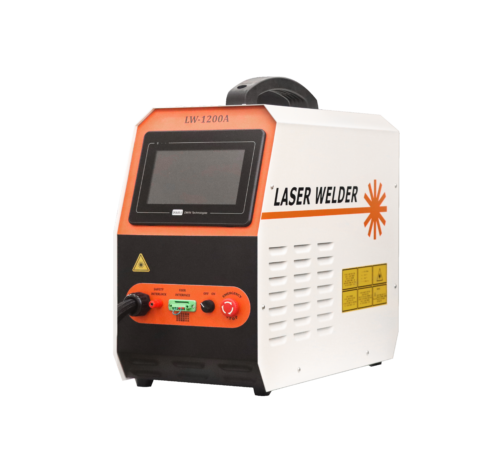
Prato Laser provides industrial laser equipment for metal sheet cutting, tube cutting, welding, cleaning, and marking applications.
For Fiber Laser Stainless Steel applications, Prato Laser can help buyers evaluate material thickness, production volume, edge quality requirements, machine structure, and suitable laser power.
Depending on the application, buyers can choose sheet metal laser cutting machines, laser tube cutting machines, or other related laser equipment. For stainless steel tube processing, Prato Laser also offers a fully automatic laser tube cutting machine for round, square, rectangular, and shaped tube cutting.
For buyers who are unsure about the right configuration, sample cutting and technical consultation can help reduce purchasing risk.
Fiber Laser Stainless Steel cutting is not only about cutting through stainless steel. A good machine should deliver stable speed, clean edges, accurate parts, and reliable production over time.
The right choice depends on stainless steel thickness, edge quality requirement, gas use, production volume, machine configuration, and service support. For most buyers, the best machine is not always the highest-power model. It is the machine that matches daily production and helps the factory cut parts with less waste and fewer problems.
Yes. Manufacturers widely use fiber laser cutting for stainless steel sheets and parts. With suitable power, gas, focus, and cutting parameters, it can produce accurate shapes and clean edges.
For thin stainless steel sheets, 1500W may be enough. When the material thickness reaches 2–5 mm, 3000W–6000W is often more practical for daily production. Buyers who cut thicker stainless steel or handle high-volume orders should evaluate 6000W–12000W through sample testing.
Nitrogen is recommended when buyers need a clean and bright stainless steel edge. Air cutting can reduce gas cost, but the edge finish may not be suitable for high-quality visible parts.
Yes. A laser tube cutting machine can cut stainless steel tubes. Round, square, rectangular, and shaped tubes can be processed depending on the machine structure and chuck system.
Buyers should use suitable laser power, correct focus, stable gas pressure, clean lenses, proper nozzle size, and tested cutting parameters. Buyers should also request sample cutting before confirming the machine.

English