

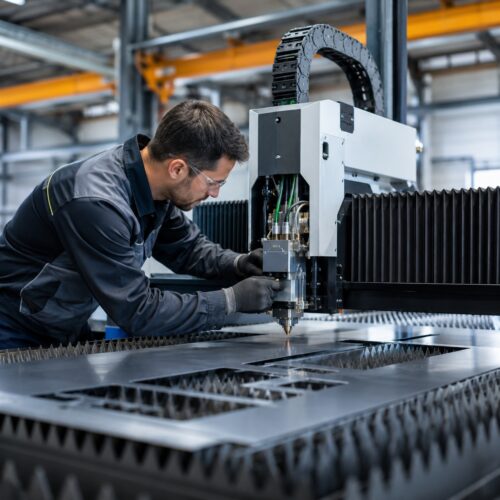
Unexpected power loss can interrupt laser cutting in the middle of a job. If the machine cannot accurately return to the interrupted position, the result may be wasted material, repeated cutting, longer downtime, and additional production cost.
This is where breakpoint resume laser cutting becomes useful.
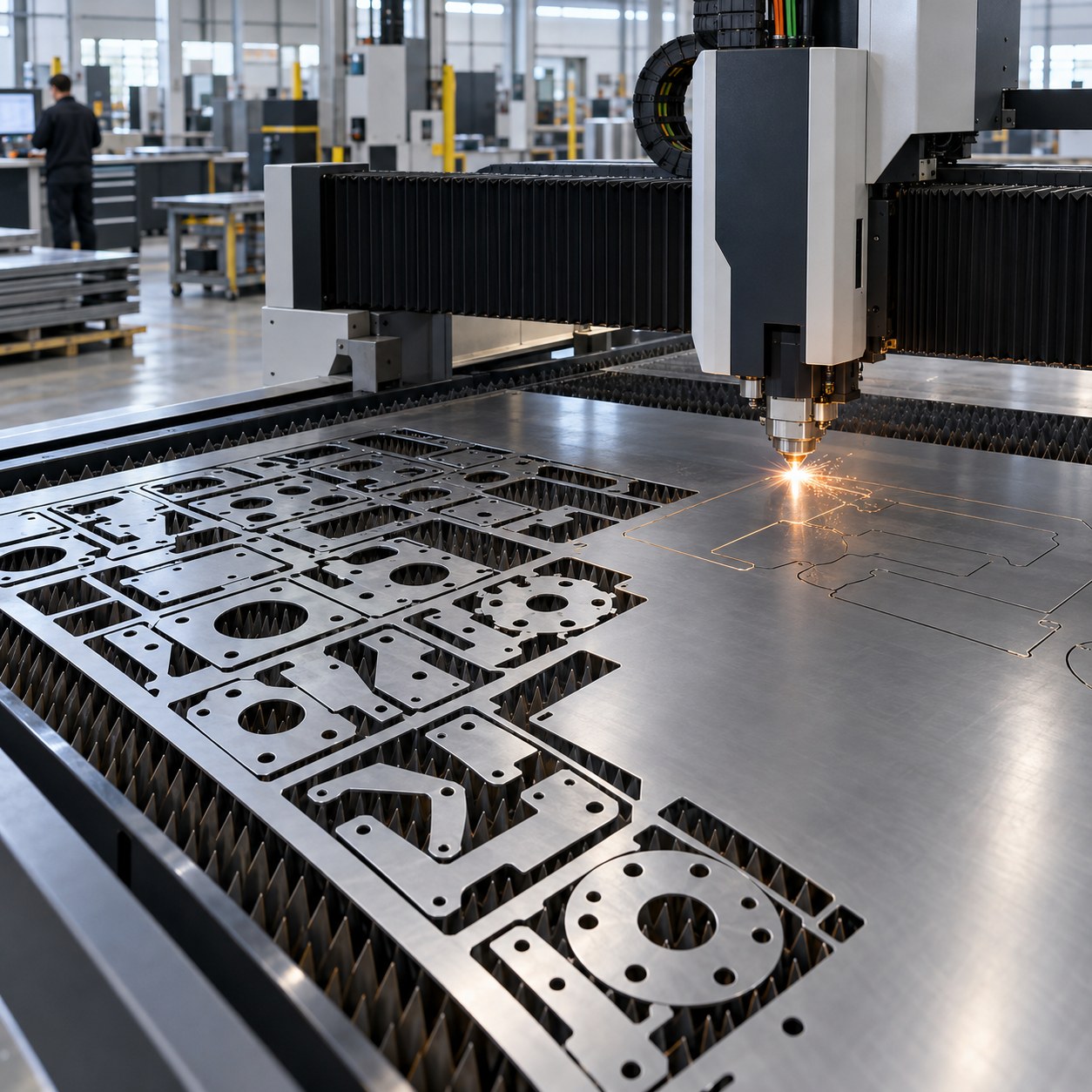
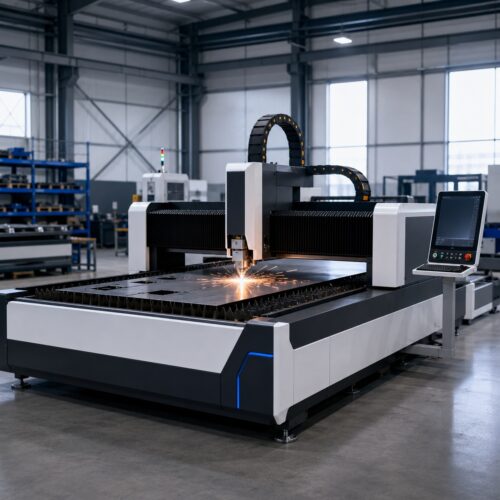
Breakpoint resume allows a CNC laser cutting system to continue processing from an interrupted point instead of restarting the entire program from the beginning. For large sheets, long contours, or high-value materials, this function can significantly reduce unnecessary scrap.
During normal cutting, the CNC system continuously controls:
If power suddenly fails, the machine stops immediately.
The main challenge is not simply restarting the equipment. The system must also determine:
If these conditions are not verified correctly, the resumed cut may not align with the previous cutting path.
This can create:
Breakpoint resume is a CNC function that allows the machine to continue machining from the point where processing was interrupted.
Instead of loading the program and cutting the entire sheet again, the control system retrieves saved machining information and resumes from or near the previous stopping point.
According to Weihong’s NcEditor laser cutting CNC system documentation, the resume function can be used after an emergency stop, power failure, or manual stop, provided that the workpiece coordinate remains accurate. If the coordinate accuracy cannot be guaranteed, the machine should first return the axes to the machine origin before resuming.
The exact method depends on the CNC system and machine configuration, but the general process includes several steps.
During cutting, the controller stores information related to the current processing state.
Depending on the system, this may include:
When power is lost, the stored data is used as a reference after restart.
After power is restored, the system must make sure the machine position is correct.
Some CNC systems require all axes to return to machine origin before power-failure resume is executed. Weihong specifically notes that returning to machine origin is essential for accurate power-failure recovery.
The controller identifies the previous machining breakpoint.
Depending on the CNC architecture, the machine may:
Returning slightly before the interruption can help create a smoother transition between the old and new cutting sections.
After the position, coordinate system, and process conditions are confirmed, the machine continues the unfinished job.
This avoids repeating all previously completed cutting paths.
The biggest advantage is simple: it avoids restarting the entire job.
Imagine a large sheet where 80% of the parts have already been cut when a sudden power outage occurs.
Without a reliable resume function, the operator may face several problems:
With breakpoint resume, the machine can continue from the interrupted section instead.
This can reduce:
For expensive stainless steel, aluminum, brass, or thick plate, avoiding even one scrapped sheet can make a meaningful difference in production cost.
Breakpoint resume provides the most value in jobs with long processing times or expensive materials.
Typical situations include:
Large-format sheet cutting
A large sheet may require many minutes or even much longer to complete. Restarting the whole job wastes both material and machine time.
Thick plate cutting
Thicker materials generally require slower cutting speeds and longer piercing time.
If processing stops near the end of the job, restarting becomes particularly inefficient.
High-value materials
Materials such as stainless steel, aluminum, brass, and copper may have relatively high material costs.
Reducing scrap directly helps control production cost.
Complex nesting layouts
When dozens or hundreds of parts are nested on one sheet, restarting the entire program can damage already completed components.
Long contour cutting
Large structural parts often involve long continuous cutting paths.
A power interruption near the end of the contour can otherwise result in significant rework.
Breakpoint Resume vs Restarting the Entire Job
| Item | Restart Entire Job | Breakpoint Resume |
|---|---|---|
| Completed cutting paths | May be repeated | Usually retained |
| Material waste risk | Higher | Lower |
| Recovery time | Longer | Shorter |
| Rework risk | Higher | Lower |
| Gas/electricity consumption | Higher | Lower |
| Suitable for large sheets | Less efficient | More practical |
The value becomes more obvious as sheet size, material cost, and processing time increase.
Breakpoint resume should not be treated as a simple “press continue” function.
Before restarting, operators should confirm several conditions.
The machine must know its correct position.
If the CNC system requires homing after restart, complete this process first.
If the sheet shifts during the outage or restart process, the saved cutting coordinates may no longer match the physical workpiece.
Check:
Inspect whether the cutting head, nozzle, or protective lens was affected during the interruption.
Make sure gas pressure and supply have returned to normal before cutting continues.
If possible, confirm where the system plans to resume cutting.
For some jobs, restarting slightly before the interrupted point can produce a smoother joint.
For high-value parts, operators should monitor the first resumed section carefully before allowing the entire program to continue.
No.
Breakpoint resume reduces risk, but it cannot guarantee that every interrupted job can be perfectly recovered.
Problems may still occur if:
This is why machine configuration, control system capability, and operator procedure all matter.
Breakpoint resume is useful, but manufacturers can further reduce risk through several additional measures:
For factories processing high-value sheets, these preventive measures can reduce unexpected production losses.
Modern fiber laser cutting machines increasingly rely on CNC control systems that support functions such as:
These functions help reduce manual intervention and improve production continuity.
For manufacturers processing large sheets, thick plate, or high-volume orders, intelligent recovery functions can be an important part of overall equipment efficiency.
1. What is breakpoint resume in laser cutting?
Breakpoint resume is a CNC function that allows a laser cutting machine to continue processing from an interrupted point instead of restarting the entire cutting program.
2. Can a laser cutting machine resume after a power outage?
Yes, if the CNC system supports power-failure recovery or breakpoint resume and the machine coordinates can be restored accurately.
3. Does the machine need to return to origin before resuming?
It depends on the CNC system. Some systems require homing after a power failure to restore accurate machine coordinates before breakpoint resume is used.
4. Can breakpoint resume reduce material waste?
Yes. It can help avoid repeating completed cutting paths and reduce the risk of scrapping partially processed sheets.
5. Is breakpoint resume useful for large sheets?
Yes. The function is especially valuable for large-format sheets, thick plate, long contours, and expensive materials because restarting these jobs can be costly.
Unexpected power loss can create serious production problems during laser cutting, especially when processing large sheets or high-value materials.
A reliable breakpoint resume laser cutting function allows the CNC system to recover the interrupted process and continue from the previous machining position instead of restarting the entire job.
When coordinates, sheet position, cutting conditions, and restart points are properly verified, breakpoint resume can help reduce material scrap, rework, downtime, and operating cost.
Prato Laser provides fiber laser cutting solutions for sheet metal processing and industrial production requirements.


English