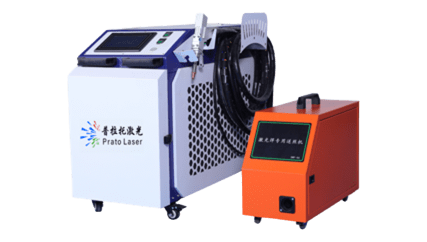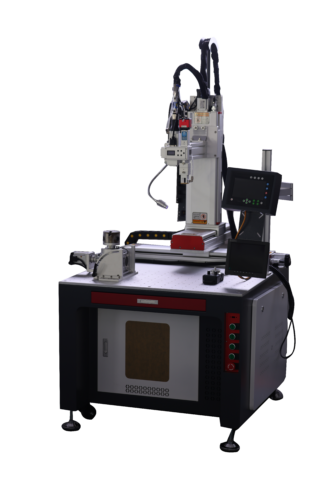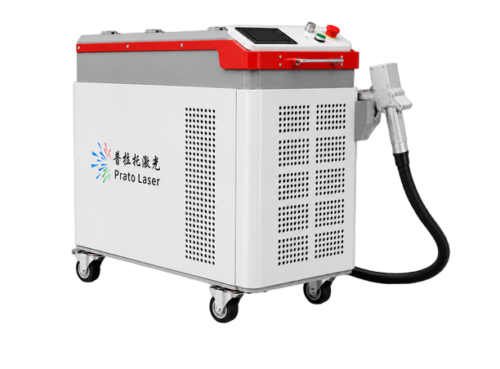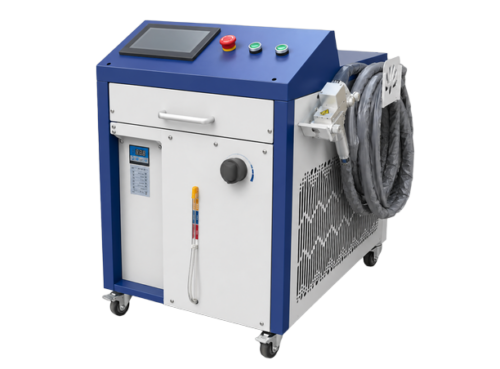


Weld quality depends not only on the welding machine and process parameters, but also on the condition of the metal surface before welding.
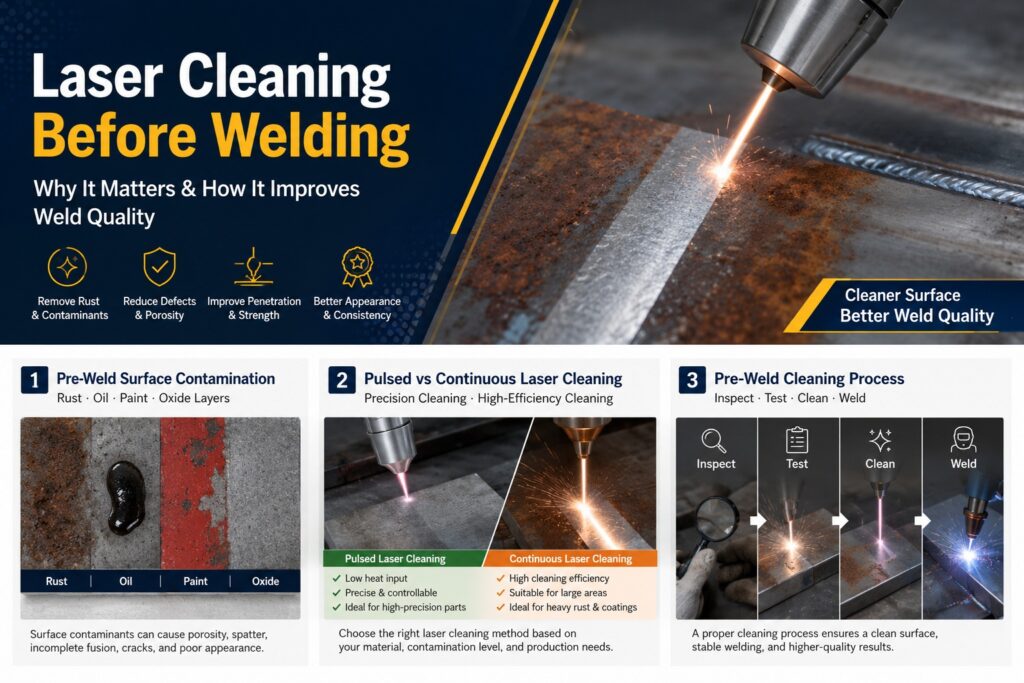
Rust, oil, paint, moisture, oxide layers, dust, and other contaminants can interfere with the molten pool and reduce joint stability. These contaminants may lead to porosity, spatter, incomplete fusion, cracks, discoloration, and inconsistent weld appearance.
Using laser cleaning before welding helps remove unwanted surface layers without direct mechanical contact. It provides a controlled surface preparation method for carbon steel, stainless steel, aluminum, and other metal materials.
When the joint area is cleaner and more consistent, operators can achieve more stable penetration, better weld appearance, and fewer defects during production.
Welding requires clean contact between the workpieces and a stable molten pool.
If contaminants remain on the surface, they may melt, burn, evaporate, or release gases during welding. These reactions can disturb the molten metal and affect the final weld.
Common surface contaminants include:
Even when the surface looks acceptable, invisible oil, moisture, or thin oxide layers may still affect welding performance.
Proper surface preparation helps create more repeatable welding conditions, especially in batch production.
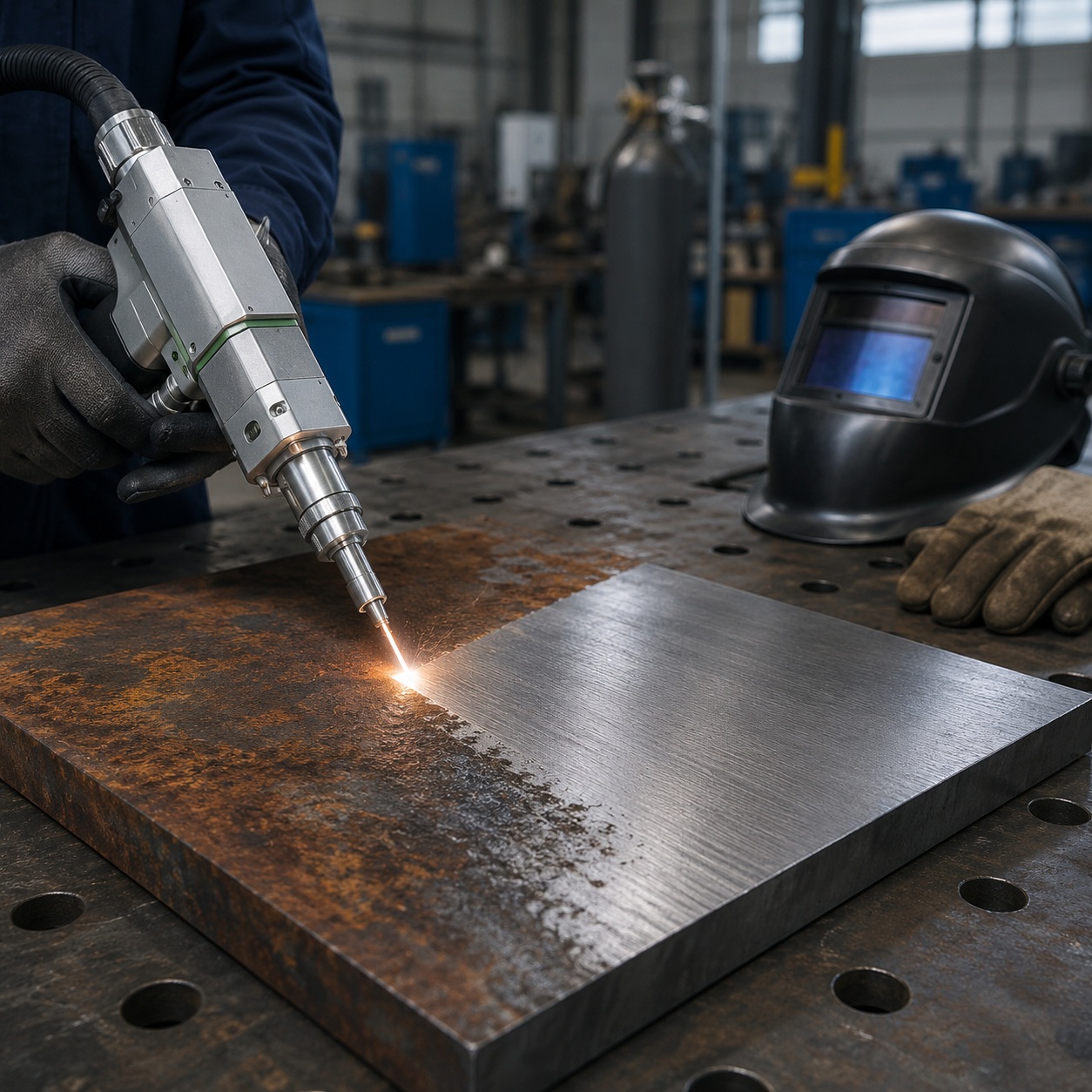
Laser cleaning uses a focused laser beam to remove contaminants from a metal surface.
The laser energy interacts with rust, oxide layers, paint, oil residue, and other unwanted materials. These surface layers absorb the laser energy and are removed through rapid heating, expansion, vaporization, or separation from the base material.
The cleaning process can be adjusted by changing parameters such as laser power, pulse frequency, scanning speed, cleaning width, and movement speed.
A pulsed laser cleaning machine is often suitable for controlled surface preparation because it can remove contaminants with relatively low heat input.
For large areas with heavy rust or coating removal requirements, continuous-wave laser cleaning may provide higher cleaning efficiency.
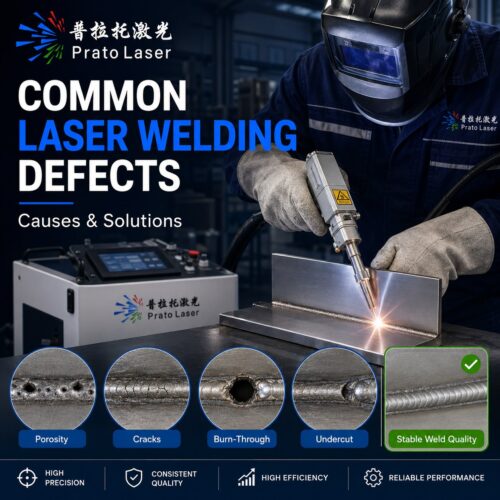
Porosity appears as small holes or cavities inside or on the surface of the weld.
Oil, moisture, rust, paint, and oxide layers can release gases when heated. If these gases become trapped in the molten pool, pores may form as the weld cools.
Laser cleaning helps remove these contaminants before welding, reducing the amount of gas-producing material around the joint.
This does not guarantee that porosity will never occur, because shielding gas, welding parameters, filler wire, and joint design also affect the result. However, a cleaner surface removes one major source of instability.
Surface contamination can interfere with laser energy absorption and molten pool behavior.
Heavy rust, thick oxide layers, paint, and grease may prevent the welding energy from interacting consistently with the base material. This can contribute to unstable penetration or incomplete fusion.
After laser cleaning, the welding process can act more directly on the metal surface. This helps operators maintain more consistent penetration when the other welding parameters are correctly set.
Spatter may increase when contaminants burn, expand, or react inside the molten pool.
Oil, paint, and rust can cause unstable melting and rapid gas release. These reactions may eject small amounts of molten metal from the welding area.
Removing surface contamination before welding helps create a calmer and more predictable molten pool.
Laser cleaning should be combined with suitable laser power, welding speed, focus position, shielding gas, and joint fit-up for the best result.
Clean surface preparation can help produce a smoother and more uniform weld bead.
When oil, paint, rust, or oxide residues remain near the joint, the finished weld may appear dark, irregular, discolored, or contaminated.
Laser cleaning can improve the consistency of the joint surface before welding. This is especially useful for stainless steel products, metal furniture, kitchen equipment, visible enclosures, and other appearance-sensitive applications.
Cracks can result from several factors, including unsuitable filler wire, material composition, high internal stress, excessive heat input, or contamination.
Surface impurities may enter the molten pool and affect the final weld structure. Removing these materials before welding can reduce one possible cause of cracking and poor joint strength.
For crack-sensitive materials, manufacturers should still carry out process testing and confirm the correct welding parameters.
Batch production requires repeatable results.
If some workpieces are clean while others contain rust, oil, or oxide layers, the same welding parameters may produce different results.
Laser cleaning helps create a more consistent starting surface. This makes it easier to standardize welding power, speed, wire feeding, shielding gas, and operator procedures.
A consistent surface condition can also reduce the amount of parameter adjustment required between parts.
Carbon steel parts often contain rust, mill scale, oil, paint, or storage contamination.
Before welding, laser cleaning can remove local rust and coating residues around the joint. This helps reduce porosity, spatter, and inconsistent fusion.
For heavy rust or thick coatings, multiple cleaning passes or a higher-efficiency cleaning configuration may be required.
Stainless steel surfaces may contain oil, fingerprints, production residue, discoloration, or oxide layers.
Clean preparation is important when the weld appearance matters. Surface contamination can cause dark marks, oxidation, irregular weld color, and unstable bead formation.
Laser cleaning can prepare the joint area without the aggressive scratching that may result from some mechanical methods.
Aluminum naturally forms an oxide layer on its surface. This oxide layer has different melting characteristics from the base aluminum and can affect welding stability.
Oil, moisture, and oxide contamination may increase the risk of porosity and poor fusion.
Controlled laser cleaning can remove surface contamination and reduce the oxide layer before welding. Aluminum cleaning parameters should be carefully selected to avoid unnecessary heat input or surface damage.
Galvanized steel contains a zinc coating that may create fumes and affect welding behavior.
When welding requires local coating removal, laser cleaning can remove the zinc layer from the joint area in a controlled way.
Operators should use proper ventilation and follow the correct safety procedures because zinc-containing fumes can be hazardous.
Mechanical grinding is widely used for rust and coating removal. It can be effective, but it also has some limitations.
Grinding tools make direct contact with the workpiece and may leave scratches, remove part of the base material, or create an uneven surface.
Grinding wheels and abrasive discs also wear during use and generate dust.
Laser cleaning is a non-contact process. It can remove contaminants from selected areas without applying mechanical pressure to the workpiece.
Compared with grinding, laser cleaning may provide:
However, the most suitable method depends on the contamination type, surface area, cleaning speed, equipment cost, and production requirements.
Chemical cleaning can remove oil, grease, oxide layers, and other contaminants.
However, chemical methods may require storage, handling, washing, drying, and waste treatment. Residual chemicals may also affect welding if the surface is not properly rinsed and dried.
Laser cleaning does not require chemical cleaning agents. It can reduce liquid waste and simplify local surface preparation.
For certain contaminants or large-scale processing, chemical cleaning may still be practical. Manufacturers should compare safety, environmental management, cleaning accuracy, and total operating cost before choosing a method.
The right cleaning method depends on the workpiece and contamination level.
Pulsed Laser Cleaning
Pulsed laser cleaning uses short laser pulses to remove contaminants.
It is often suitable for:
A pulsed laser can provide more controlled cleaning when the goal is to remove contamination while protecting the base material.
Continuous-wave laser cleaning delivers continuous laser energy.
It is often suitable for:
Continuous cleaning generally provides higher efficiency for large areas, but the heat input may be greater.
For precise weld preparation, pulsed cleaning is often the more flexible option. For heavy contamination or large surfaces, continuous cleaning may be more efficient.
A stable process can be organized into the following steps:
Trial cleaning is especially important for thin materials, aluminum, coated parts, and appearance-sensitive products.
Welding should normally begin as soon as practical after surface cleaning.
A freshly cleaned metal surface may start reacting with air, moisture, dust, or workshop contamination. Aluminum can quickly form a new oxide layer, while carbon steel may begin to oxidize in humid conditions.
To protect the cleaned surface:
The suitable time interval depends on the material and workshop environment.
Using Too Much Cleaning Power
Excessive laser power or slow movement may overheat the surface, change its appearance, or affect thin materials.
Start with conservative parameters and increase cleaning intensity gradually.
Cleaning a Larger Area Than Necessary
For weld preparation, operators usually only need to clean the joint and nearby heat-affected area.
Cleaning unnecessary areas increases processing time and energy use.
Ignoring Joint Gaps and Fit-Up
Laser cleaning improves surface condition, but it cannot correct excessive gaps, poor alignment, or incorrect joint geometry.
The workpieces should still be properly positioned and fixed before welding.
Leaving Too Much Time Between Cleaning and Welding
A cleaned surface can become contaminated again.
Avoid leaving cleaned parts exposed to dust, humidity, oil, and handling for long periods.
Changing Cleaning and Welding Parameters at the Same Time
When defects occur, operators should adjust one process factor at a time.
This makes it easier to determine whether the problem comes from cleaning quality, welding parameters, shielding gas, filler wire, or joint fit-up.
Safety Considerations
Laser cleaning and laser welding should only be performed by trained operators in controlled work areas.
Laser cleaning may generate dust, vapor, smoke, paint residue, rust particles, and other airborne contaminants. The type of fume depends on the material and coating being removed.
Suitable extraction and ventilation should be used near the cleaning area. Operators should also wear appropriate eye, skin, respiratory, and hearing protection according to the equipment instructions and workplace risk assessment.
Welding may also generate hazardous fumes and gases. General guidance is available from OSHA welding safety guidance.
Painted, galvanized, chemically treated, or unknown surfaces should be evaluated carefully before cleaning or welding.
1. Why is cleaning necessary before laser welding?
Cleaning removes rust, oil, paint, oxide layers, moisture, and other contaminants that can disturb the molten pool. A cleaner surface can help reduce porosity, spatter, incomplete fusion, discoloration, and inconsistent weld quality.
2. Can laser cleaning remove rust before welding?
Yes. Laser cleaning can remove light or heavy rust depending on the machine type, laser power, cleaning speed, and number of passes. Pulsed cleaning is often used for controlled preparation, while continuous cleaning may be more efficient for large or heavily rusted areas.
3. Is laser cleaning suitable for aluminum before welding?
Yes. Laser cleaning can remove oil, contamination, and surface oxide from aluminum. The parameters should be carefully controlled because aluminum is sensitive to heat and quickly forms a new oxide layer.
4. Can laser cleaning replace grinding completely?
Not in every application. Laser cleaning can replace grinding in many local surface preparation tasks, especially where controlled, non-contact cleaning is important. The final choice depends on contamination thickness, surface area, speed, budget, and production requirements.
5. Does laser cleaning damage the base metal?
When suitable parameters are used, laser cleaning can remove contaminants with limited effect on the base metal. Excessive power, slow movement, or repeated passes may affect the surface, so trial cleaning is recommended.
6. Should I use a pulsed or continuous laser cleaning machine before welding?
Pulsed laser cleaning is generally more suitable for controlled weld preparation, thin parts, oxide removal, and sensitive surfaces. Continuous laser cleaning is more suitable for large areas, heavy rust, and thick coatings.
7. How wide should the cleaned area be?
The cleaned area should cover the joint and the nearby region that may affect the molten pool and shielding gas protection. The required width depends on the joint type, welding method, material thickness, and contamination.
8. Can laser cleaning reduce welding porosity?
Laser cleaning can reduce porosity caused by oil, moisture, rust, paint, and oxide contamination. Porosity may still occur due to unstable shielding gas, dirty filler wire, unsuitable parameters, or poor joint fit-up.
9. Can Prato Laser provide cleaning and welding solutions together?
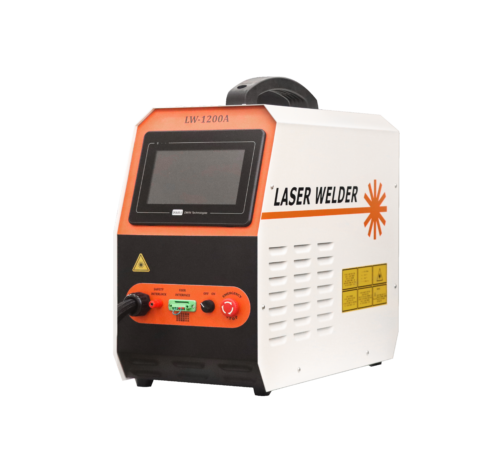
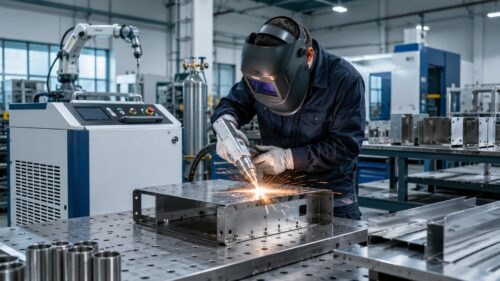
Yes. Prato Laser can recommend a suitable laser cleaning machine and handheld laser welding machine based on the material, contamination, thickness, joint type, and production volume.
Laser cleaning before welding helps create a cleaner and more consistent joint surface.
By removing rust, oil, paint, oxide layers, moisture, and other contaminants, manufacturers can reduce the risk of porosity, spatter, incomplete fusion, discoloration, and unstable weld appearance.
Pulsed laser cleaning is often suitable for controlled, low-heat weld preparation, while continuous-wave cleaning is useful for larger areas and heavier contamination.
The final weld quality still depends on welding power, speed, shielding gas, filler wire, focus position, joint fit-up, and operator technique. However, proper pre-weld cleaning provides a more stable foundation for the entire welding process.
Prato Laser provides laser cleaning, welding, cutting, marking, and tube processing solutions for metal manufacturing. You can contact Prato Laser for a suitable cleaning and welding configuration based on your production requirements.

English