

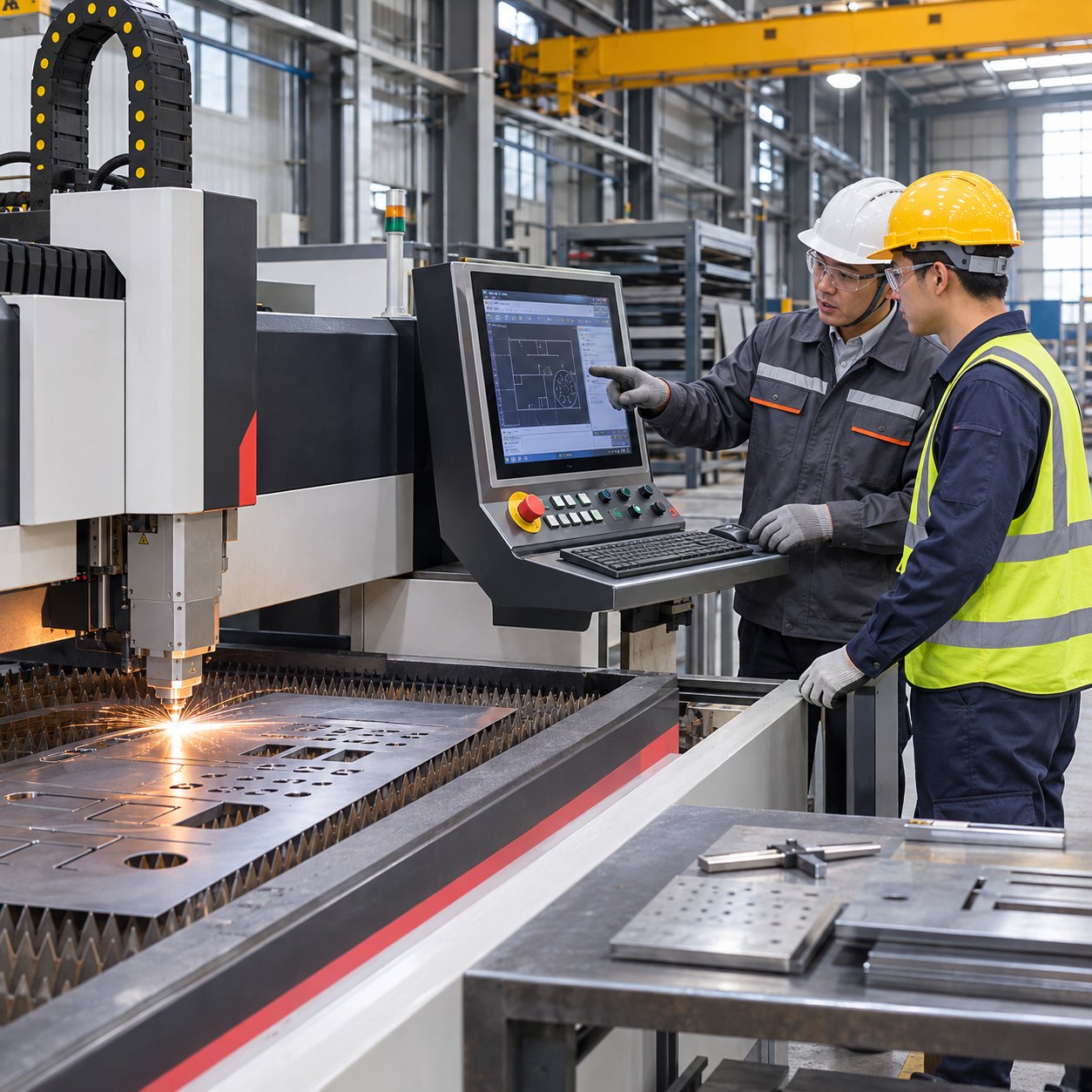
A high-performance laser cutting machine does not automatically guarantee high production efficiency.
In actual manufacturing, laser cutting operator training can directly affect cutting speed, part quality, material utilization, machine downtime, and consumable costs.
Two factories may use similar laser cutting equipment but achieve very different results because operators have different levels of experience in parameter adjustment, program management, machine maintenance, and problem diagnosis.
For manufacturers investing in fiber laser cutting equipment, operator training should therefore be considered part of production efficiency rather than simply an after-sales service.
Modern fiber laser cutting machines combine laser sources, cutting heads, CNC systems, servo systems, auxiliary gases, nesting software, and automated functions.
Operators need to understand more than just how to start and stop the machine.
Professional training normally includes:
TRUMPF, for example, includes cutting techniques, parameter modification, nozzle alignment, focus testing, program management, basic maintenance, and common cutting problem diagnosis in its operator training programs.
Official reference:
https://www.trumpf.com/en_US/products/services/services-machines-systems-and-lasers/training-courses/
Laser cutting quality depends on multiple parameters working together.
These include:
An inexperienced operator may spend significant time adjusting parameters through repeated trial and error.
A trained operator can usually identify the main cause of a cutting problem more quickly.
For example, excessive slag may be related to:
Instead of changing several parameters randomly, experienced operators can make more targeted adjustments.
This reduces setup time and helps production return to normal more quickly.
Poor operation can cause quality problems even when the machine itself is functioning normally.
Common issues include:
Operators who understand the relationship between material, power, speed, focus, and auxiliary gas are more likely to identify abnormal cutting conditions before large quantities of parts are affected.
Early intervention can help reduce:
This is especially important in batch production.
If a problem is discovered only after dozens of sheets have been processed, the cost can be much higher than the cost of proper operator training.
Machine downtime is not always caused by major component failure.
In many factories, production stops because of relatively small issues such as:
A trained operator can often recognize basic problems before calling technical support.
This does not mean operators should perform complicated repairs themselves.
Instead, training helps them distinguish between:
This can shorten troubleshooting time and reduce unnecessary downtime.
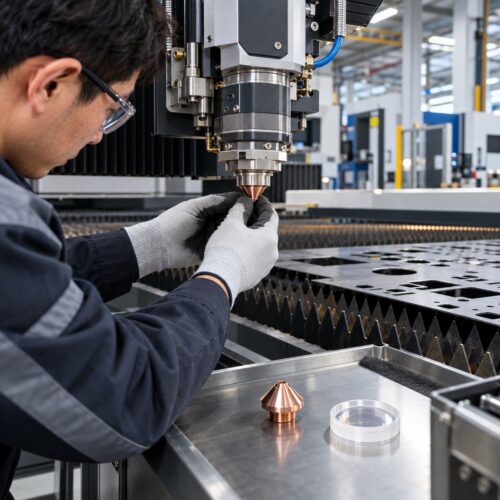
Nozzles, protective lenses, ceramic rings, filters, and other consumables are part of normal laser cutting operating costs.
Incorrect operation may shorten their service life.
Examples include:
A trained operator understands when a consumable should be cleaned, inspected, adjusted, or replaced.
This helps prevent a small consumable problem from affecting more expensive cutting-head components.
For more information about consumable inspection, manufacturers can also review routine maintenance procedures for fiber laser cutting machines.
Modern laser cutting machines often process many different orders every day.
Operators may need to manage:
Poor program management can cause:
Training helps operators understand how to correctly load, verify, and manage production programs before cutting begins.
This becomes increasingly important when a factory handles high-mix, low-volume orders.
Machine productivity is not only determined by cutting speed.
Material utilization also matters.
Operators who understand nesting can improve:
A machine may cut extremely fast, but poor nesting can still create excessive material waste.
Good operator training helps manufacturers use both the machine and software more effectively.
Unexpected events can interrupt laser cutting.
Examples include:
After an interruption, the operator needs to understand how to safely restore production.
This may involve:
An operator who does not understand the recovery procedure may restart the entire job unnecessarily or damage an already processed sheet.
Correct recovery procedures can reduce both downtime and material loss.
Experienced operators often notice small changes before they become serious problems.
For example:
These signals may indicate that the machine or process needs attention.
Early identification can prevent a minor problem from turning into extended downtime.
Automation does not eliminate the need for skilled operators.
Instead, operator responsibilities change.
Modern systems may include:
Operators need to understand how these systems work together.
Without proper training, factories may use only a small portion of the machine's available capabilities.
TRUMPF notes that good training helps users exploit the full potential of machines, laser systems, and software, which is why its training programs include operation, programming, maintenance, and application courses.
https://www.trumpf.com/en_US/products/services/services-machines-systems-and-lasers/training-courses/
A practical training program should normally cover several areas.
Operators should understand:
Operators should learn how:
Training should include:
Operators should understand:
Daily and periodic maintenance should include:
Operators should understand common causes of:
Yes, but the benefit does not come from making the machine physically faster.
Training improves the way the machine is used.
A skilled operator can help reduce:
At the same time, trained operators can make better use of:
This helps improve overall equipment utilization.
When purchasing industrial laser equipment, buyers often compare:
However, training and technical support should also be considered.
A supplier that provides clear operator training can help customers move from machine installation to stable production more quickly.
For overseas buyers in particular, training should ideally explain:
Prato Laser provides laser cutting solutions for different sheet metal processing requirements, together with technical guidance for equipment operation and production applications.
The required time depends on the machine, automation level, operator experience, and production requirements. Basic operation may be learned relatively quickly, while parameter optimization and troubleshooting require more practical experience.
Modern CNC systems make basic operation easier, but proper training is still recommended because incorrect parameters, maintenance, or recovery procedures can affect quality and machine efficiency.
Yes. Operators need to recognize how power, speed, focus, gas pressure, nozzle condition, and material characteristics affect cutting results.
Yes. Trained operators can identify routine problems more quickly, perform basic maintenance correctly, and know when professional technical support is required.
Yes. Machines, software, automation functions, and cutting processes continue to evolve. Periodic training can help experienced operators use new functions more effectively.
The productivity of a laser cutting machine depends on more than laser power and cutting speed.
Operator knowledge affects parameter adjustment, cutting quality, material utilization, consumable life, troubleshooting, and production recovery.
Proper laser cutting operator training helps manufacturers make better use of their equipment, reduce avoidable downtime, and maintain more stable production.
For companies investing in new laser cutting equipment, operator training should therefore be considered an important part of the total production solution rather than an optional service.

English