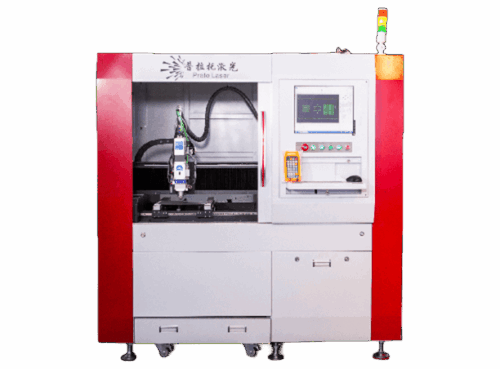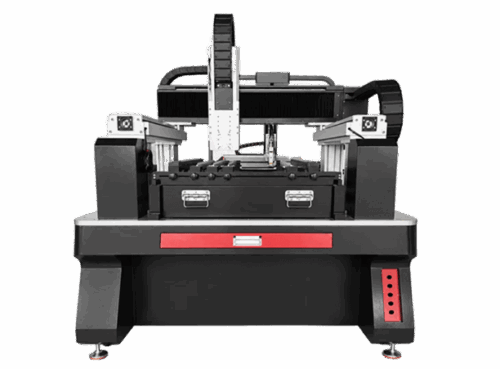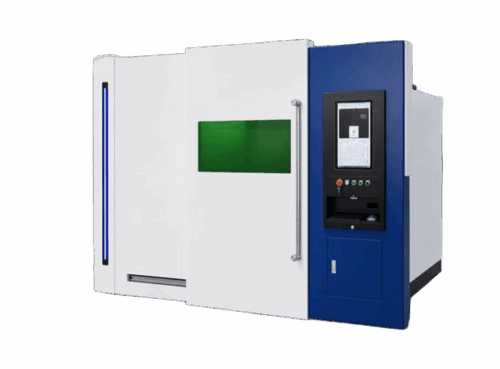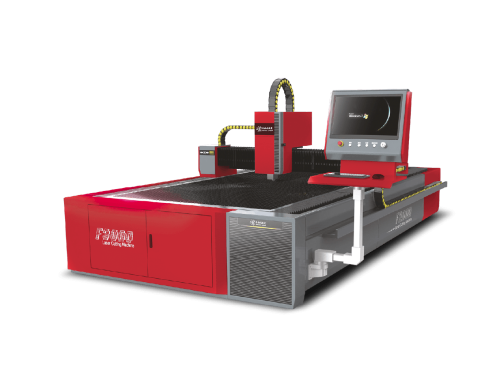


Choosing the right laser marking technology is important for achieving clear, durable, and consistent product identification.
Two of the most common options are UV laser marking and fiber laser marking. Although both technologies can create permanent marks without ink or labels, they work differently and are better suited to different materials and applications.
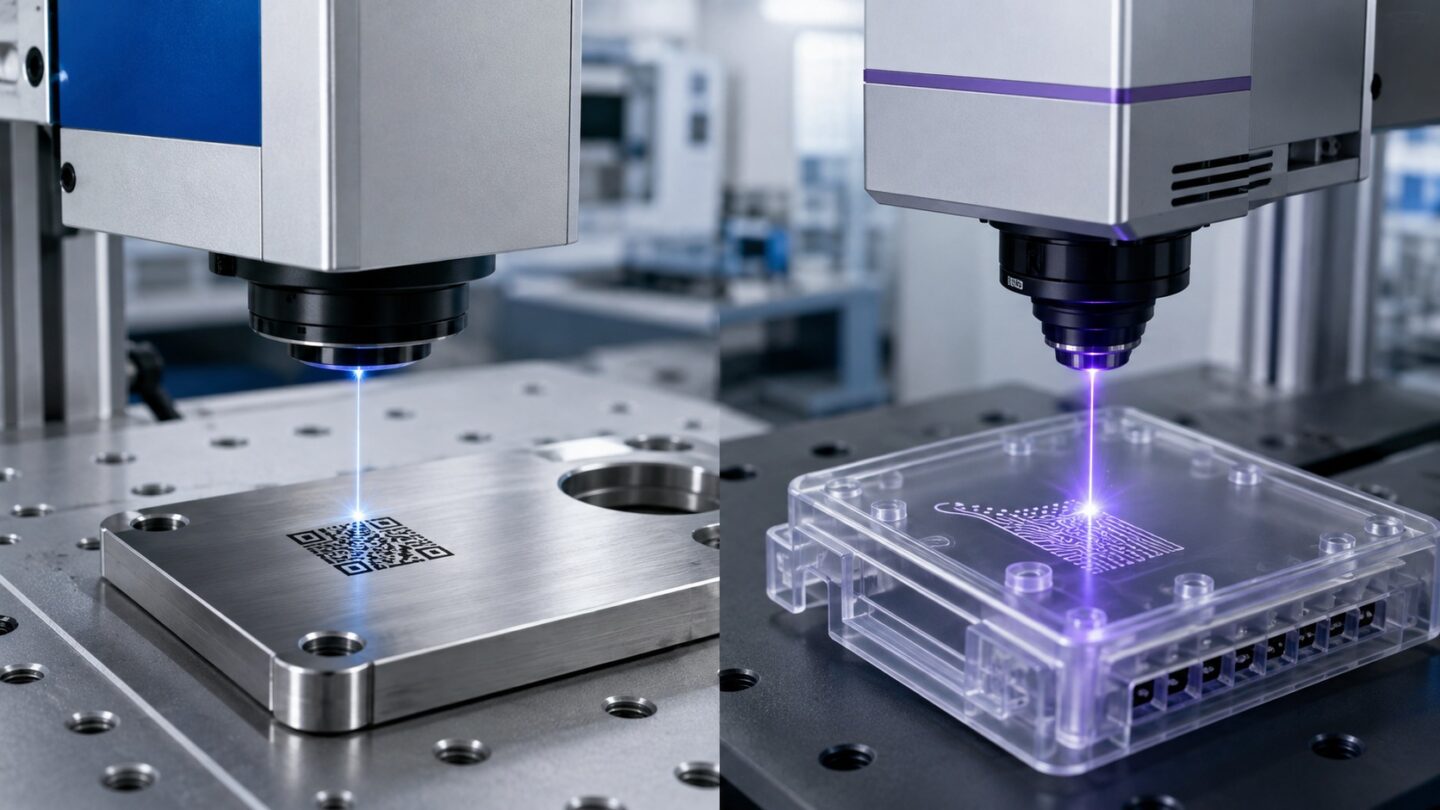
The main difference between UV vs fiber laser marking lies in wavelength, heat impact, material compatibility, and marking effect.
For manufacturers, the best choice depends on what material needs to be marked, the required marking quality, production speed, and whether the surface is sensitive to heat.
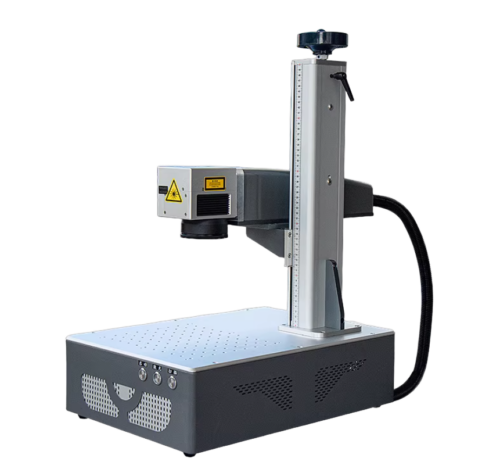
Fiber laser marking typically uses a 1064 nm laser wavelength and is widely used for permanent marking on metal parts.
A fiber laser marking machine is commonly used for:
Fiber laser marking is especially suitable for logos, serial numbers, QR codes, barcodes, production dates, model numbers, and traceability information.
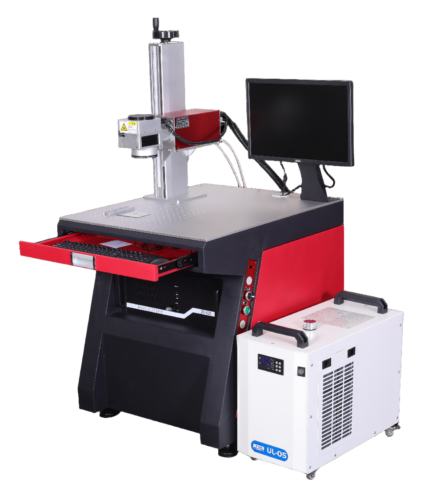
Because fiber lasers interact strongly with many metal surfaces, they are widely used in industrial metal marking applications. Prato Laser’s fiber laser marking systems are designed for permanent metal identification and support powers such as 20W, 30W, 50W, and 100W depending on the application. (Prato Laser)
UV laser marking usually uses a 355 nm wavelength.
Compared with fiber laser marking, UV laser marking produces less heat impact on the material surface, making it more suitable for delicate, thin, or heat-sensitive materials.
A UV laser marking machine is commonly used for:
UV marking is often selected when manufacturers need fine details, high contrast, and minimal visible heat damage.
Prato Laser’s PLT-UV system uses a 355 nm UV laser and is designed for precision marking on plastics, glass, ceramics, electronic parts, films, and packaging materials. (Prato Laser)
| Comparison | Fiber Laser Marking | UV Laser Marking |
|---|---|---|
| Typical wavelength | 1064 nm | 355 nm |
| Main materials | Metals and selected plastics | Plastics, glass, ceramics, films, electronics |
| Heat impact | Higher | Lower |
| Metal marking | Excellent | Possible on selected metals |
| Plastic marking | Suitable for selected plastics | Excellent for many sensitive plastics |
| Fine marking | Good | Excellent |
| Deep engraving | Better suited | Generally not the main application |
| Heat-sensitive materials | Limited | Better suited |
| Typical application | Metal identification | Precision and sensitive material marking |
Material is usually the first factor to consider.
If your main products are metal parts such as stainless steel, carbon steel, aluminum, tools, auto parts, or machinery components, fiber laser marking is usually the better choice.
If your products are plastic, glass, ceramic, thin film, electronic components, or packaging materials, UV laser marking is often more suitable.
According to KEYENCE, fiber lasers are commonly used for high-contrast metal marking, while UV lasers are especially useful for heat-sensitive materials because they can reduce surface damage. (基恩士)
One of the biggest differences between UV and fiber laser marking is heat input.
Fiber laser marking often relies more on thermal interaction with the material surface.
For metals, this can create clear and durable marks.
However, some plastics or sensitive materials may discolor, deform, or burn if too much heat is introduced.
UV laser marking uses shorter-wavelength light and can achieve marking with less thermal impact.
This makes UV especially suitable for:
For applications where surface appearance is critical, UV marking can help reduce burning and deformation.
Both systems can create precise marks, but UV laser marking is generally better suited for very fine details and small features.
Typical UV applications include:
Fiber laser marking also provides high precision, especially on metal parts, but UV is often selected when the marking area is small and the material is sensitive.
For most industrial metal marking applications, fiber laser marking is the preferred solution.
It can create durable marks on:
Fiber lasers are also suitable when deeper engraving or faster metal marking is required.
If your factory mainly produces metal components, tools, automotive parts, or machinery parts, a fiber laser system will usually provide better overall efficiency.
UV laser marking has a clear advantage for many plastics and heat-sensitive surfaces.
Because the process creates less heat stress, UV lasers can produce cleaner marks with less risk of melting or visible damage.
Typical applications include:
For these applications, UV laser marking can provide clearer and more delicate results.
If deep engraving is required, fiber laser marking is usually more suitable.
Higher-power fiber laser systems can remove more material from metal surfaces and create deeper marks.
UV laser marking is mainly focused on fine, clean, low-heat marking rather than deep engraving.
Therefore:
If the requirement is deep metal engraving, choose fiber.
If the requirement is fine, low-damage marking, UV is often the better option.
Both technologies can support high-speed industrial marking.
The actual production speed depends on:
Fiber laser marking is generally very efficient for metal production lines.
UV laser marking may require different parameter settings to achieve delicate marks on sensitive materials, but it offers advantages where surface quality is more important than marking depth.
The easiest way is to start with your material.
Choose fiber laser marking if you mainly work with:
Choose UV laser marking if you mainly work with:
If your production includes multiple materials, sample testing is recommended before choosing a machine.
You can also review Prato Laser’s full range of laser marking machines for different material and production requirements. (Prato Laser)
1. Is UV laser marking better than fiber laser marking?
Not necessarily. UV laser marking is better for many sensitive materials, while fiber laser marking is usually better for metal marking and deeper engraving.
2. Can a fiber laser mark plastic?
Yes, but only selected plastics respond well to fiber laser wavelengths. Material testing is recommended.
3. Can a UV laser mark metal?
Yes, UV lasers can mark selected metals, but fiber lasers are generally more efficient for most industrial metal marking applications.
4. Which laser is better for QR code marking?
Both can mark QR codes. Fiber lasers are commonly used on metal parts, while UV lasers are better suited for fine codes on plastics, electronics, and packaging.
5. Which laser marking machine is better for heat-sensitive materials?
UV laser marking is usually the better choice because it produces lower heat impact and reduces the risk of burning or deformation.
The choice between UV and fiber laser marking mainly depends on material type and marking requirements.
Fiber laser marking is usually better for metal parts, industrial identification, deeper engraving, and high-speed metal production.
UV laser marking is better suited for plastics, glass, electronics, packaging, and other heat-sensitive materials that require fine and clean marks.
By selecting the correct laser wavelength and configuration, manufacturers can improve marking quality, reduce material damage, and achieve more stable production.
Prato Laser provides both fiber laser marking machines and UV laser marking machines for different industrial marking applications.
English