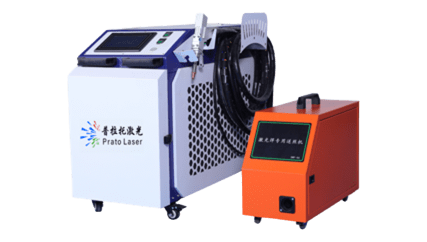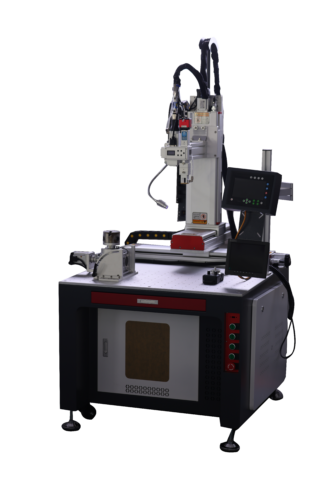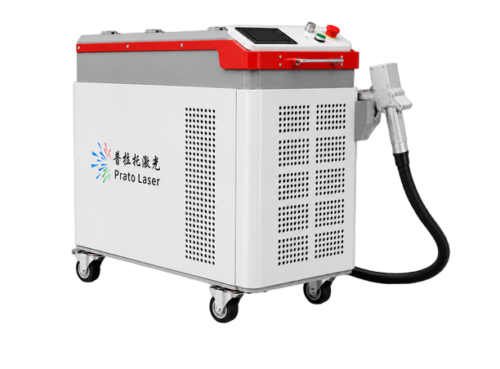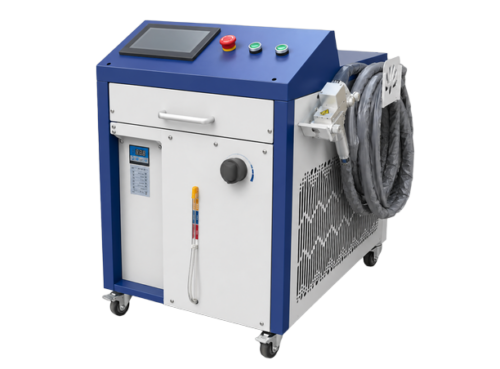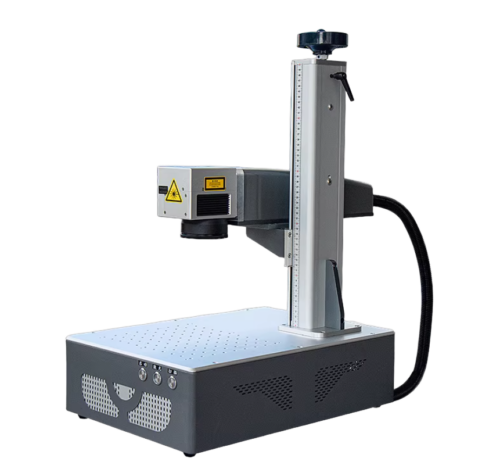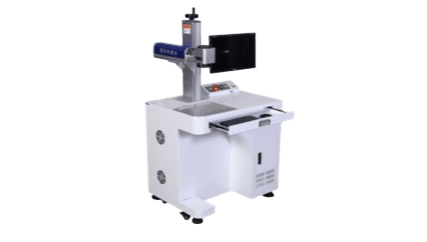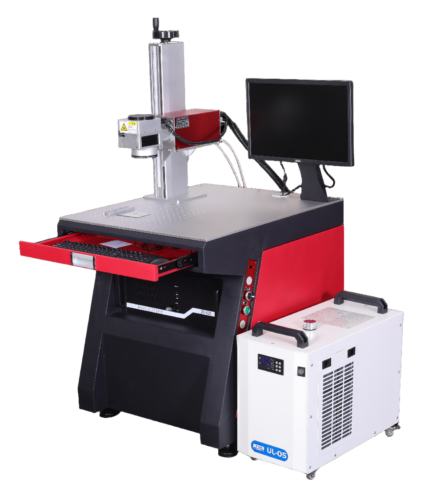


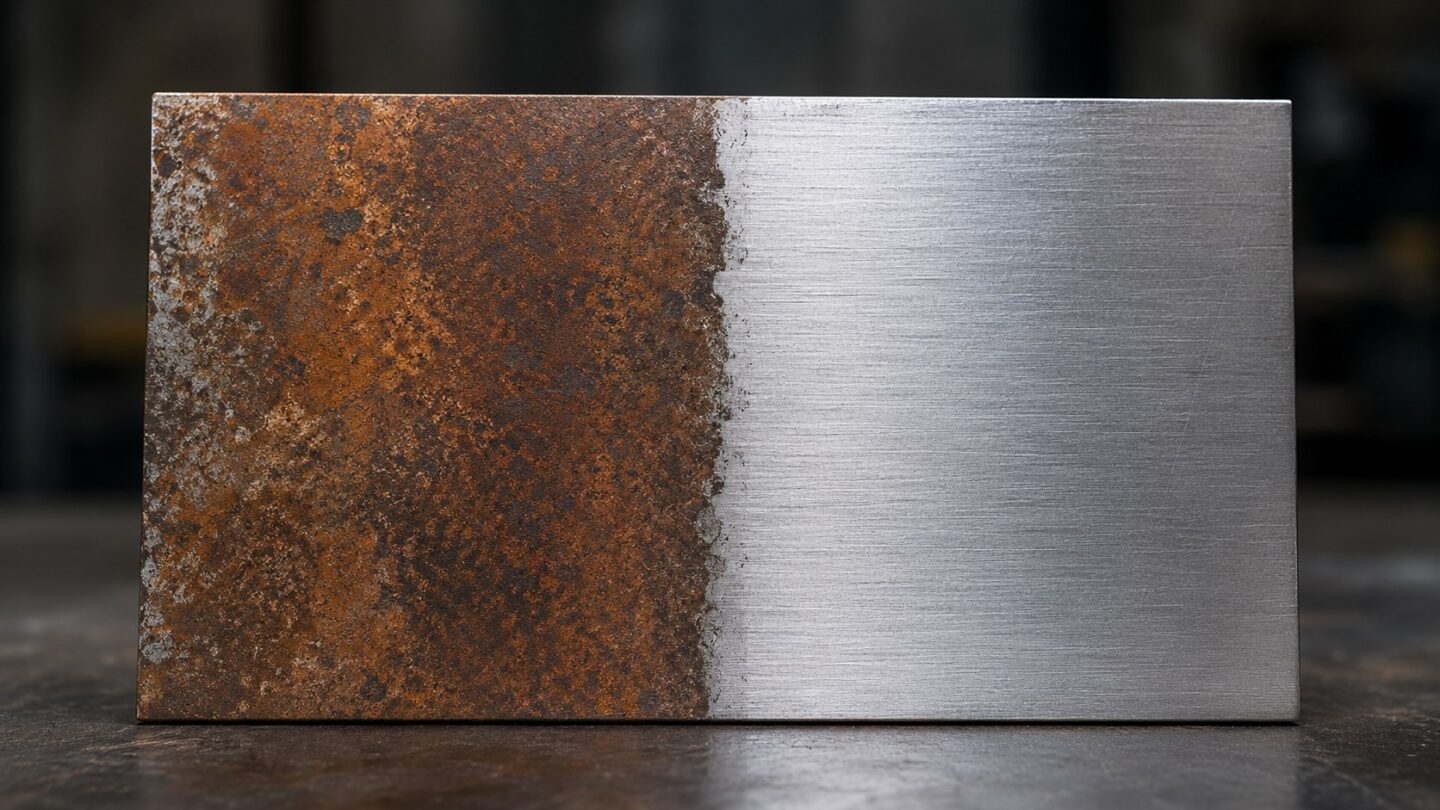
A Laser Cleaning Machine is becoming a practical option for factories that need cleaner rust removal, oxide cleaning, coating removal, and surface preparation. In metal fabrication, machinery maintenance, automotive parts, steel structures, and mold repair, surface treatment is often a hidden cost. It affects welding quality, coating adhesion, inspection accuracy, and final product appearance.
Traditional cleaning methods still have their place. Abrasive blasting, grinding, wire brushing, and chemical cleaning are widely used because they are familiar and accessible. Yet many factories are now reviewing whether these methods are still efficient enough for modern production. Dust control, chemical disposal, labor intensity, and inconsistent surface quality are pushing manufacturers to look for more controlled alternatives.
Laser cleaning is not a universal replacement for every surface treatment process. It is a tool that works best when the application matches its strengths.
Surface cleaning has become more important as factories move toward tighter quality requirements. A welded structure may fail inspection because rust or oil was not removed properly. A painted part may experience poor adhesion because the surface profile was inconsistent. A repaired mold may lose precision if manual grinding removes too much material.
These are not small problems. They create rework, delays, and additional labor cost.
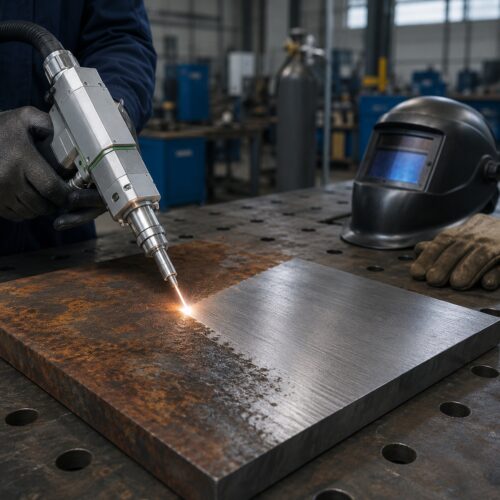
A Laser Cleaning Machine uses focused laser energy to remove contaminants from a surface. Depending on the application, it can clean rust, oxide layers, paint, oil, coating residue, or welding discoloration. Because the process is non-contact, it can reduce mechanical wear on the base material compared with aggressive grinding or blasting.
For many workshops, the main attraction is control. Operators can clean specific areas without treating the entire part. This makes the process useful for repair, maintenance, precision components, and localized surface preparation.
Manufacturers looking for dedicated cleaning systems can review the Prato Laser Laser Cleaning Machine category for related equipment options.
A Laser Cleaning Machine can be used before or after several production processes.
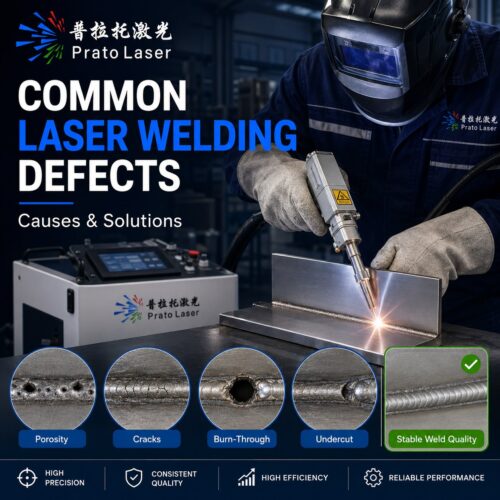
Before welding, it can remove rust, oil, and oxide layers from the joint area. This improves surface cleanliness and may help reduce weld defects caused by contamination.
After welding, it can remove discoloration, oxide marks, or light surface residue depending on the material and cleaning setup. In stainless steel fabrication, this can reduce manual polishing work for certain parts.
Before coating or painting, laser cleaning can prepare selected metal surfaces without chemical cleaning. The process may be useful for factories that need controlled cleaning before protective coatings.
In maintenance departments, laser cleaning is often used for rust removal on machine parts, tools, molds, shafts, steel plates, and structural components. It can also support repair work where transporting the part to a blasting room is not practical.
The method is especially useful for:
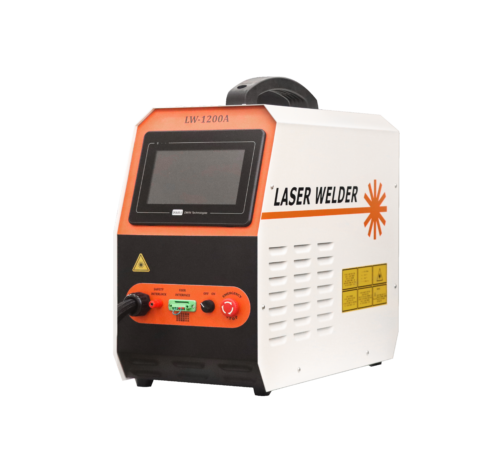
When welding and cleaning are part of the same production flow, factories may also compare related equipment under the Handheld Laser Welding Machine category.
The biggest benefit of laser cleaning is not only speed. It is process control.
With abrasive blasting, the cleaning area can be difficult to limit. Dust collection and media handling also require additional equipment. With chemical cleaning, disposal and worker exposure must be managed carefully. With manual grinding, quality depends heavily on operator experience.
A Laser Cleaning Machine can reduce some of these challenges. It allows more targeted cleaning, produces less secondary waste than blasting media, and avoids chemical agents in many applications.
There is also a labor advantage. Manual rust removal is tiring and inconsistent. Laser cleaning can make repetitive cleaning tasks easier to standardize.
For factories producing export products, cleaner and more repeatable surface preparation can support better quality control. This matters in industries where coating adhesion, weld appearance, and dimensional accuracy are closely inspected.
Another benefit is reduced damage to the base material. A properly configured system can remove surface contamination while limiting impact on the workpiece. This is useful for molds, precision components, and parts that cannot tolerate aggressive mechanical treatment.
Laser cleaning has clear advantages, but it is not magic.
Heavy layers of paint, thick scale, deep corrosion, or large surface areas may still require other cleaning methods, or a combination of processes. For example, abrasive blasting may remain more economical for very large steel structures where surface profile is required across broad areas.
Surface reflectivity also matters. Different metals respond differently to laser energy. Stainless steel, carbon steel, aluminum, copper, brass, and coated surfaces require different parameters.
The cleaning speed depends on laser power, contamination thickness, surface condition, scan width, and operator technique. Buyers should be careful with exaggerated productivity claims. A sample test with real parts is more useful than a demonstration on a small clean plate.
Safety is another critical issue. Laser cleaning requires controlled work areas, operator training, protective eyewear, and awareness of reflected laser energy. Factories should refer to workplace safety guidance from OSHA and develop internal procedures before putting equipment into daily production.
Many buyers ask whether they should choose pulsed or continuous laser cleaning equipment.
Pulsed laser cleaning is often preferred for precision cleaning. It can offer better control for delicate surfaces, molds, and applications where the base material must be protected carefully. It is commonly used when surface quality is more important than maximum cleaning speed.
Continuous laser cleaning can offer strong cleaning efficiency for rust removal, coating removal, and larger surface treatment tasks. It is often selected for industrial maintenance and heavier-duty cleaning applications.
The right choice depends on the workpiece.
A mold repair company may prefer pulsed cleaning for better control. A steel fabrication workshop removing rust from structural parts may consider a continuous system. A maintenance team handling mixed parts may need to compare both options through real sample testing.
This is why buyers should not choose equipment only by power. Cleaning mode, beam quality, scan head design, cooling system, operator interface, and application support are all important.
A Laser Cleaning Machine is often used in metalworking environments where rust and oxide removal affect production quality.
In steel structure fabrication, cleaning helps prepare surfaces before welding or coating. In machinery maintenance, it can remove rust from shafts, housings, plates, and machine components. In automotive repair and parts production, it can clean localized areas before joining or restoration.
In mold maintenance, laser cleaning can remove residue without aggressive mechanical scraping. This can help preserve mold details when used correctly.
In pipe processing, flanges and weld areas can be cleaned before inspection or repair. In shipyards and heavy equipment maintenance, laser cleaning can support localized rust treatment where manual grinding would be slow.
A practical case is a metal fabrication workshop producing painted carbon steel frames. Before coating, workers used grinding wheels and chemical wiping for localized rust and oil removal. The process was inconsistent and required extra finishing. After introducing laser cleaning for selected parts, the workshop improved surface consistency in problem areas and reduced manual cleaning time on repeat jobs.
The factory did not eliminate all traditional cleaning methods. It used laser cleaning where the technology delivered clear value.
A good purchasing process starts with the real cleaning task.
Buyers should define:
The next step is sample testing. Buyers should send real parts, not ideal demonstration samples. Real parts show whether the machine can handle actual rust, coating thickness, geometry, corners, and surface conditions.
A buyer should also ask about consumables. Laser cleaning usually has fewer consumables than blasting, but protective lenses, optical parts, cooling components, and scan head maintenance still matter.
Service support is important. Industrial equipment must be maintainable. If spare parts or technical support are slow, downtime can erase the benefits of the purchase.
Factories comparing broader laser processing equipment can review Prato Laser Products for additional cutting, welding, cleaning, and marking solutions.
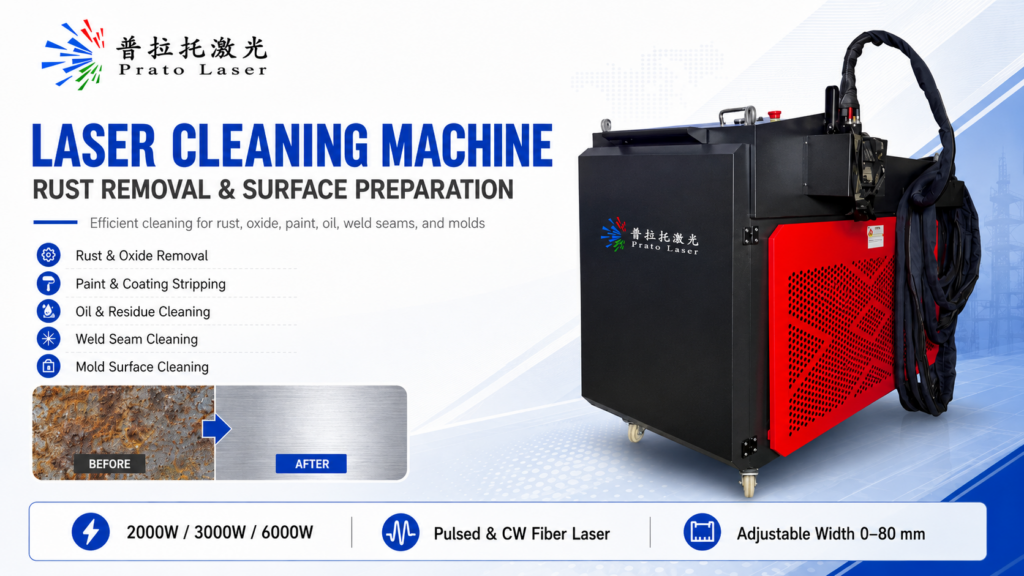
The price of a Laser Cleaning Machine depends on several factors.
Laser power is one factor. Higher power can increase cleaning speed for certain applications, but it also increases cost. A factory cleaning light rust on stainless steel may not need the same configuration as a maintenance contractor removing heavy corrosion from large steel parts.
Laser type is another factor. Pulsed and continuous systems can differ significantly in cost and application range.
Cooling design affects stability and machine size. Water-cooled systems are often used for higher-power or longer-duty applications. Compact systems may be suitable for lighter tasks.
The scan head, optical path, control software, cable quality, and safety package also influence price.
Buyers should evaluate total cost of ownership, not only quotation price. A low-cost machine with weak service support, unstable optics, or poor safety accessories may become expensive over time.
Laser cleaning should be treated as industrial laser equipment, not just a handheld cleaning tool.
Factories need proper eyewear, warning signs, controlled access, fire prevention measures, and operator training. Reflective surfaces require extra attention because reflected laser energy can create hazards outside the direct beam path.
Airborne particles and fumes may also need extraction depending on the material being cleaned. Removing paint, coatings, oil residue, or unknown contaminants can produce emissions that should be handled responsibly.
For measurement and manufacturing process control, buyers can review technical resources from NIST. Companies building formal quality procedures may also refer to ISO standards when organizing internal management systems.
Good safety planning protects workers and supports consistent production.
One common mistake is buying based only on power. Higher power may help in some heavy cleaning jobs, but it is not always better for sensitive surfaces.
Another mistake is ignoring the difference between pulsed and continuous cleaning. These systems can serve different needs.
A third mistake is skipping sample testing. Promotional videos often show simple rust removal on flat metal. Real factory parts usually have corners, weld seams, oil, paint layers, and inconsistent corrosion.
Some buyers also underestimate operator training. Laser cleaning is easier to automate than some manual methods, but operators still need to understand parameters, focus distance, scan speed, and safety requirements.
The final mistake is treating laser cleaning as a full replacement for every cleaning method. In many factories, the best result comes from a mixed workflow.
Laser cleaning is gaining attention because manufacturers want cleaner, more controlled surface preparation. Environmental concerns, labor pressure, quality expectations, and maintenance efficiency all support this trend.
For small and medium-sized factories, the technology is especially attractive when cleaning quality affects downstream processes. Welding, painting, coating, inspection, and repair all depend on surface condition.
The strongest adoption will likely come from factories that can identify specific bottlenecks. Rust removal before welding, oxide cleaning after welding, mold cleaning, localized coating removal, and maintenance repair are practical entry points.
The market is moving away from treating laser cleaning as a novelty. Buyers now want application-specific recommendations, sample testing, and realistic cost analysis.
A Laser Cleaning Machine can improve rust removal, oxide cleaning, and metal surface preparation when used in the right application. It offers cleaner processing, less secondary waste than abrasive media, and better control for localized work.
It also requires proper safety management, realistic expectations, and careful equipment selection.
For factory owners, the right question is not whether laser cleaning is better than every traditional method. The better question is where it removes labor, rework, contamination, and process instability from the current workflow.
Manufacturers with specific cleaning materials or rust removal projects can contact Prato Laser through Contact Us for sample testing and equipment selection guidance.
A laser cleaning machine uses laser energy to remove rust, oxide layers, paint, coatings, oil residue, and other surface contaminants from metal parts.
Common materials include carbon steel, stainless steel, aluminum, copper, brass, molds, machine parts, and coated metal surfaces.
Laser cleaning offers better control and less secondary waste in many localized applications. Sandblasting may still be more economical for very large surface areas.
Yes, laser cleaning can remove certain paints and coatings, but performance depends on coating thickness, material type, power, and cleaning parameters.
Pulsed laser cleaning is often preferred for precision surfaces and molds. Continuous laser cleaning is often used for heavier rust removal and larger industrial cleaning tasks.
Laser cleaning can be safe when used with proper protective eyewear, controlled work areas, fume extraction, operator training, and safety procedures.
Buyers should evaluate material type, contamination thickness, cleaning speed, surface sensitivity, power, laser type, cooling design, safety setup, and supplier support.
Yes. Laser cleaning can remove rust, oil, oxide layers, and surface contamination before welding, helping improve cleanliness around the joint area.

English