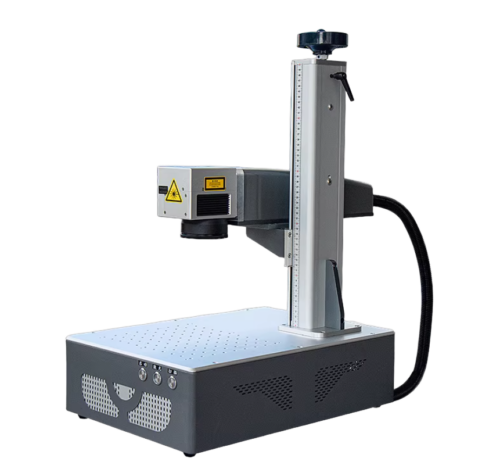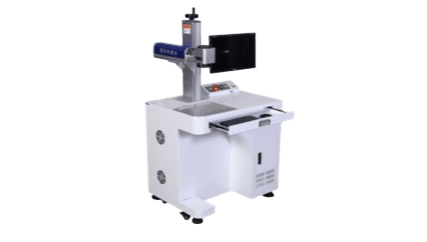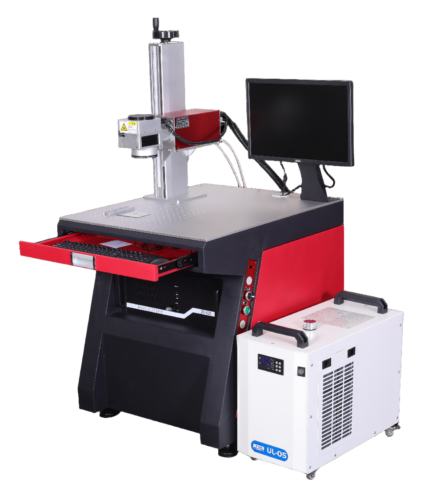


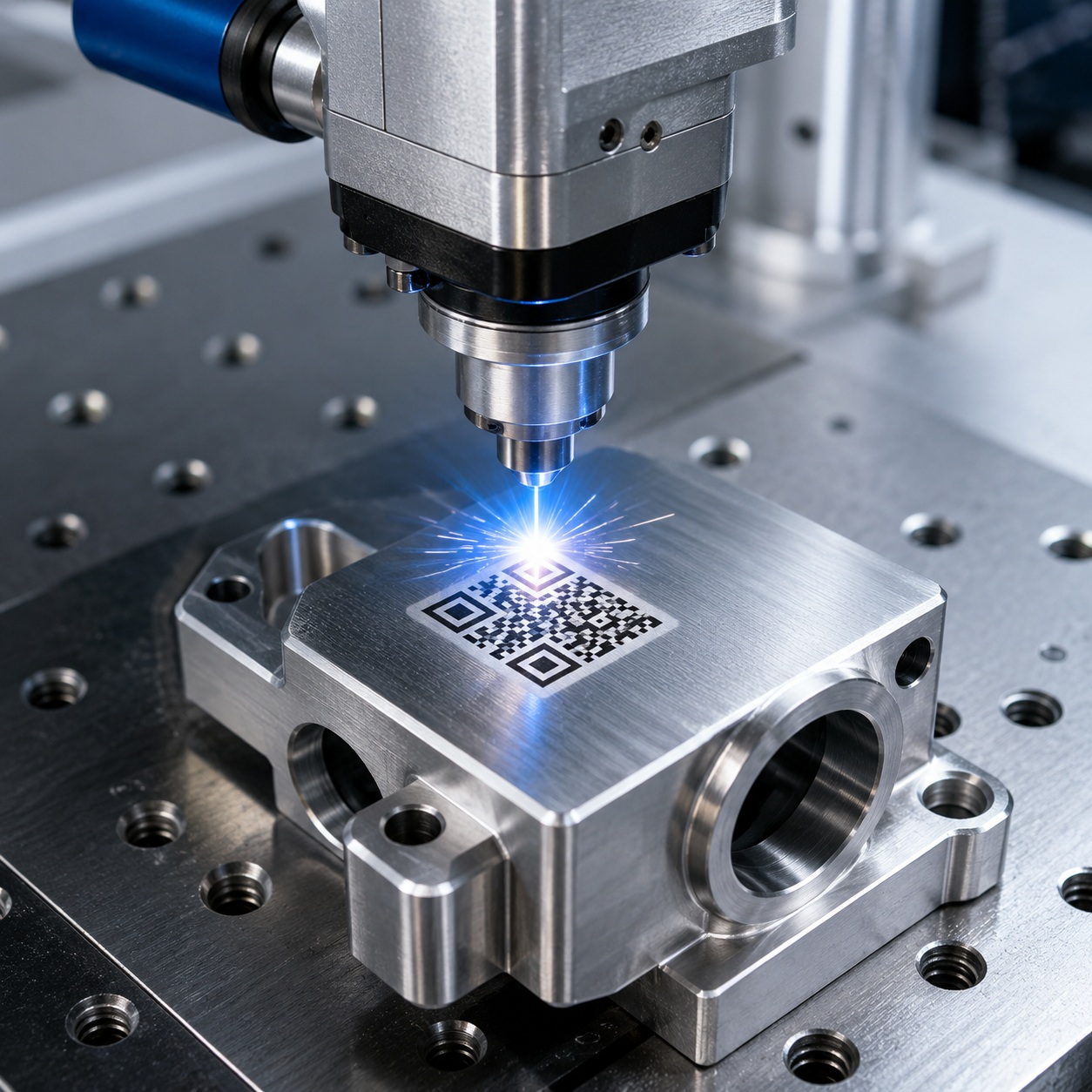
QR Code Laser Marking is becoming more important for manufacturers that need durable part identification, batch control, and product traceability. Instead of relying on labels or ink, factories can use laser marking to create permanent QR codes directly on metal parts.
For industrial production, a QR code is more than a small square pattern. It can connect a part to production data, inspection records, batch numbers, supplier information, or after-sales service details. Therefore, QR Code Laser Marking is useful for factories that want better quality control and easier product tracking.
Metal parts are often exposed to friction, oil, heat, cleaning, transportation, and long-term use. As a result, printed labels may fall off and ink marks may fade. Laser-marked QR codes can offer a more durable solution when the right material, laser settings, and marking process are used.
QR Code Laser Marking is the process of using a laser marking system to mark a QR code on a product surface. In metal manufacturing, this is often done with a fiber laser marking machine because fiber lasers are suitable for many metal materials.
The machine uses a focused laser beam to change the surface of the material. It can create dark marks, light marks, engraved marks, or surface contrast depending on the material and parameters. In addition, the marking process is non-contact, which means the laser does not need a physical tool to touch the part.
A QR code can be linked to product information, batch records, maintenance data, or inspection results. For manufacturers, this makes it easier to trace each part during production, shipment, use, and service.
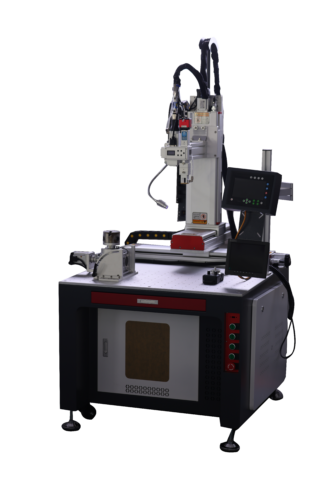
Prato Laser provides a Fiber Laser Marking Machine for QR code marking, barcode marking, serial number marking, logo marking, and industrial product identification.
Traceability is a key reason why many manufacturers choose QR Code Laser Marking. When every part has a unique code, factories can connect that part to important production information.
For example, a QR code can help identify:
This is useful when a factory needs to investigate a quality issue. Instead of checking paper records manually, workers can scan the marked code and find related information faster.
In addition, traceability can improve customer confidence. When buyers receive parts with clear and scannable identification, they can manage inventory, installation, and maintenance more easily.
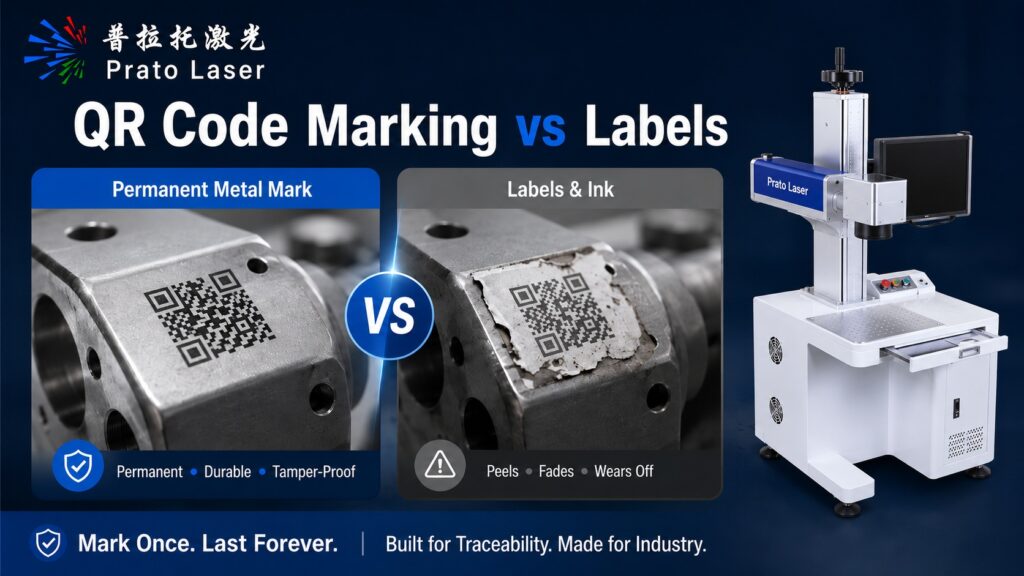
Labels and ink printing are simple identification methods. However, they may not be reliable enough for many metal parts.
A label can peel off during cleaning, transportation, or outdoor use. Ink may fade when exposed to oil, heat, friction, or chemicals. Also, labels and ink require consumables, which means long-term cost and inventory management.
In contrast, QR Code Laser Marking creates the mark directly on the metal surface. It does not require ink, labels, ribbons, or solvents during normal marking. Therefore, it can reduce consumable cost and make the marking process cleaner.
Laser marking is also suitable for small parts and detailed codes. With the right lens and parameters, the machine can create fine QR codes, serial numbers, and barcodes on compact metal components.
QR Code Laser Marking can be used on many industrial materials. The final result depends on material type, surface finish, laser power, lens size, and marking settings.
Common materials include:
Stainless steel is widely used in machinery, kitchen equipment, medical tools, and industrial parts. Aluminum is common in electronics, automotive parts, and lightweight components. Brass and copper are used in electrical parts, fittings, and precision components.
However, buyers should not rely only on material names. Surface treatment, coating, reflectivity, and required code size can affect the marking result. Therefore, sample testing is recommended before mass production.
Many industries need durable QR codes for product traceability and quality control.
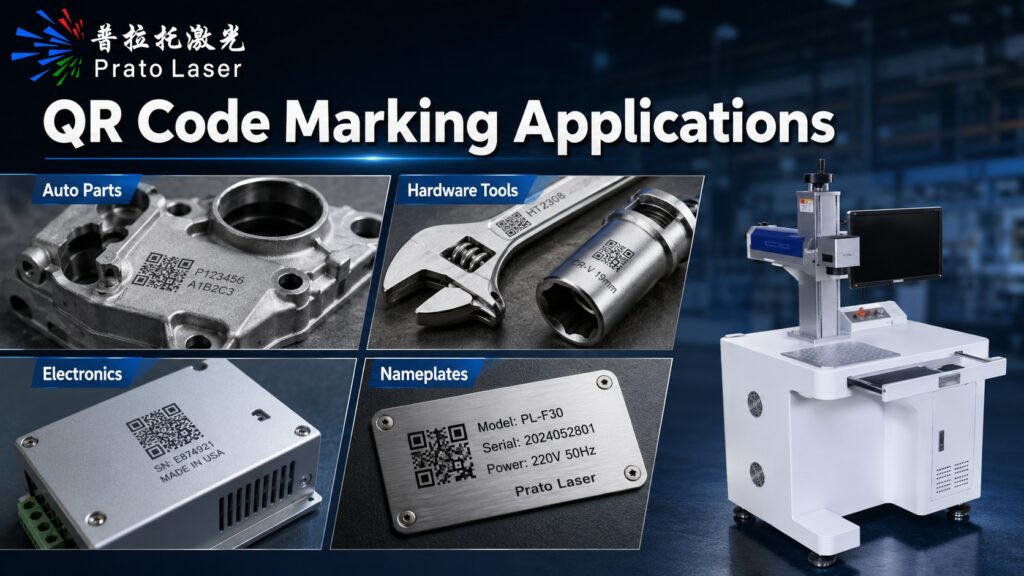
In automotive parts manufacturing, QR Code Laser Marking can be used on brackets, gears, bearings, engine parts, metal housings, and precision components. These parts often require clear batch records and long-term traceability.
In electronics manufacturing, QR codes can be marked on metal shells, connectors, small components, and precision parts. Because parts are often small, laser marking is useful for fine and compact codes.
In machinery manufacturing, QR codes can help identify parts during assembly and maintenance. A scanned code can connect the part to drawings, replacement information, or inspection records.
In hardware tool production, QR codes and serial numbers can be marked on tools, molds, fixtures, and metal accessories. This helps with product identification, anti-counterfeiting, and inventory control.
Meanwhile, medical instruments, industrial nameplates, metal tags, and precision metal parts can also benefit from permanent QR code marking.
A QR code is only useful if it can be scanned reliably. Therefore, readability is one of the most important points in QR Code Laser Marking.
First, the code size should match the scanner and application environment. If the QR code is too small, it may be difficult to scan after marking. Next, the contrast between the code and the background should be clear enough.
In addition, the surface condition matters. A polished metal surface, brushed surface, coated surface, or curved surface may require different marking parameters. Therefore, testing is important.
Factories should also consider the use environment. If the part will face friction, oil, heat, or cleaning, the marking depth and contrast should be selected carefully.
For better results, buyers should test the code with the actual scanner used in production. A code that looks clear to the eye may still need adjustment for stable scanning.
QR Code Laser Marking is often used together with barcode marking and serial number marking.
A serial number is useful for identifying one part or one product. A barcode can support fast scanning in warehouse and production systems. A QR code can store or connect more information in a compact space.
For example, a manufacturer may mark a serial number for human reading and a QR code for digital scanning. This combination improves both manual identification and automatic data collection.
In addition, QR codes can support more flexible traceability systems. When linked to a database, the code can connect to product data, inspection reports, maintenance instructions, or customer service information.
Buyers who want to understand QR code standards can review GS1 QR code information when planning product identification and traceability systems.
Before buying a marking system, buyers should define the real marking task. A machine for large nameplates may not be the same as a machine for small precision parts.
Important questions include:
The marking lens affects the marking area and precision. Laser power affects marking speed, depth, and surface result. Fixtures also matter because stable positioning helps keep QR codes clear and consistent.
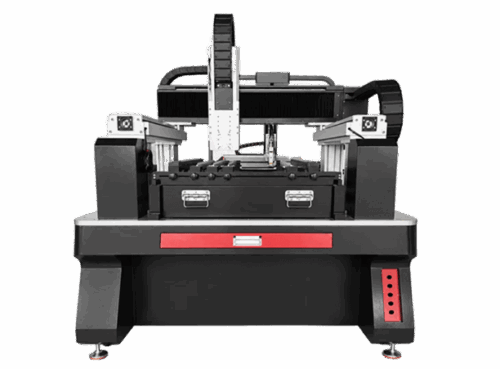
For compact production, sample marking, or smaller parts, buyers can also review the Desktop All-in-One Laser Marking Machine.
Laser marking is clean and efficient, but safety still needs attention. Operators should follow proper procedures and avoid direct exposure to laser radiation.
Factories should plan proper ventilation, smoke extraction, workpiece positioning, and daily maintenance. In addition, operators should receive training before using the machine.
For general laser safety reference, buyers can review OSHA laser hazards guidance when planning workshop safety and operator protection.
Daily maintenance is also important. The lens should be kept clean, the marking area should be stable, and commonly used parameters should be saved for repeat orders. These steps help keep QR code quality consistent.
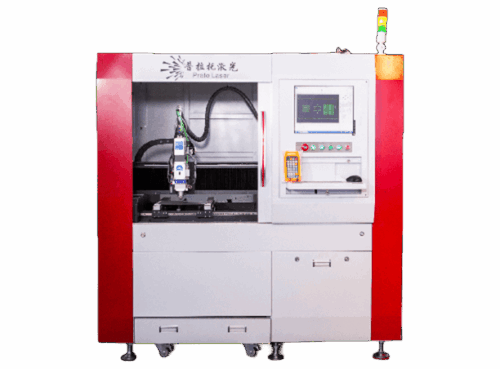
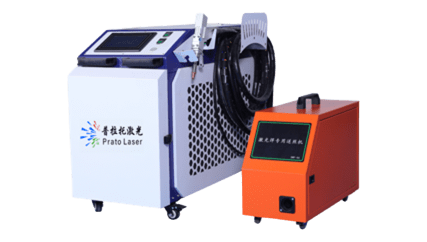
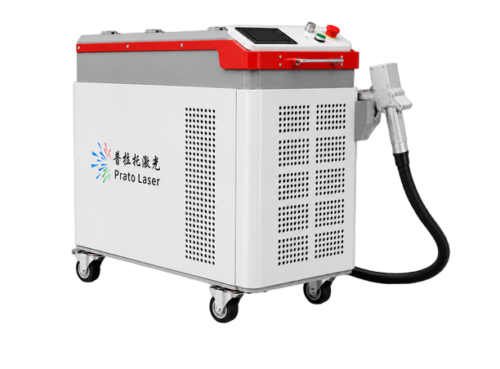
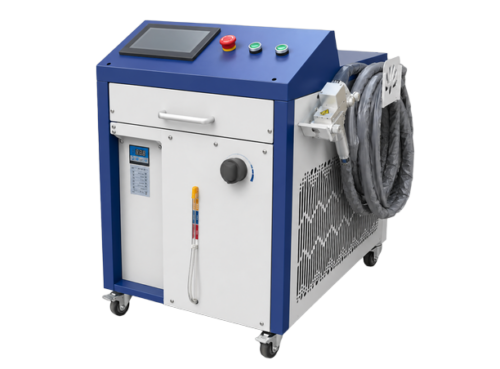
Prato Laser provides industrial laser solutions for marking, cutting, welding, and cleaning. For QR Code Laser Marking projects, the right solution should match the material, part size, code size, marking speed, and traceability requirement.
Prato Laser Fiber Laser Marking Machine is suitable for QR code marking, barcode marking, serial number marking, logo marking, and permanent part identification. It can be used for stainless steel, aluminum, brass, copper, hardware tools, electronic components, automotive parts, and machinery components.
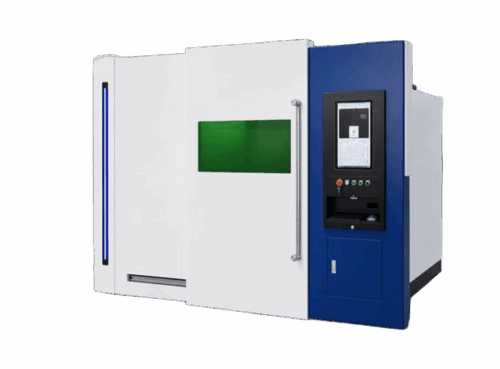
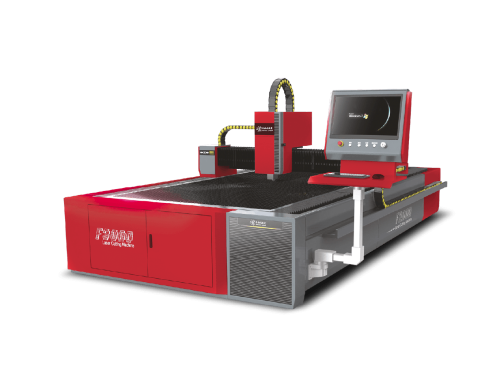
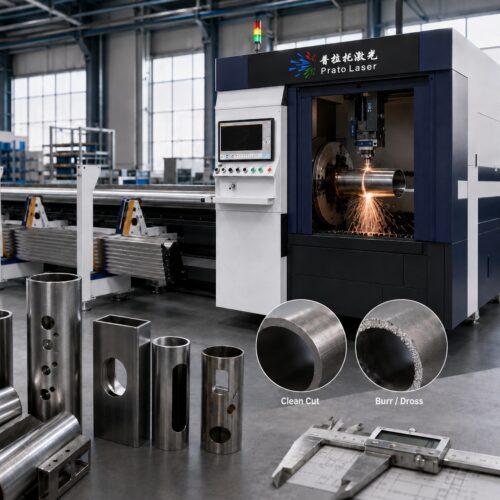
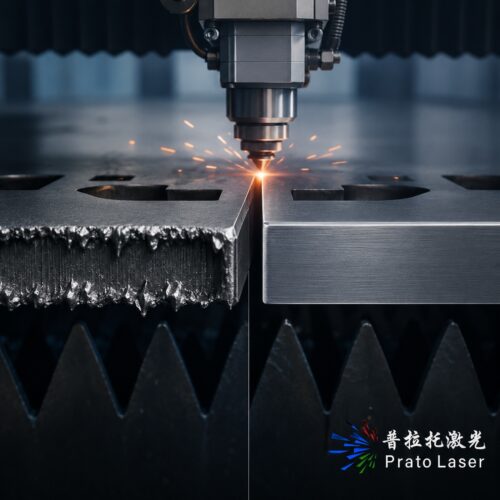
For factories that need a complete metal processing workflow, marking equipment can also work together with a fiber laser cutting machine or a laser tube cutting machine.
To learn more about Prato Laser equipment and industrial laser solutions, visit the Prato Laser homepage.
Before choosing a QR Code Laser Marking solution, buyers should test real samples. This is the most direct way to confirm marking quality.
First, prepare the actual material and surface finish. Next, provide the QR code size, marking content, and scanning requirements. In addition, test the marked code with the scanner used in production.
Buyers should also confirm whether the code must survive friction, oil, heat, cleaning, or outdoor exposure. These conditions affect marking depth and contrast.
Finally, evaluate service support. A reliable supplier should help with sample testing, parameter adjustment, fixture suggestions, software setup, and operator training.
QR Code Laser Marking is a practical solution for manufacturers that need durable, scannable, and traceable product identification. It helps connect metal parts with production data, batch records, inspection information, and after-sales service.
Compared with labels and ink printing, laser marking can provide better durability and lower consumable cost. Therefore, it is useful for automotive parts, electronics, hardware tools, machinery components, medical instruments, nameplates, and precision metal parts.
Before choosing a machine, buyers should review material type, code size, marking area, scanning requirements, production volume, fixture needs, and sample results. With the right setup, QR Code Laser Marking can improve traceability and support long-term quality control.
QR Code Laser Marking is the process of using a laser marking machine to create a QR code directly on a product surface. It is commonly used for metal part traceability and product identification.
Laser marking creates durable QR codes without ink or labels. It is suitable for metal parts that may face friction, oil, heat, cleaning, or long-term industrial use.
Yes. QR Code Laser Marking is widely used on stainless steel parts. It can create clear and scannable marks when the correct parameters are used.
A barcode usually stores information in a linear format. A QR code is a two-dimensional code and can connect to more information in a compact space.
Yes. A laser-marked QR code can be scanned if the code size, contrast, surface quality, and marking parameters are correct. Testing with the actual scanner is recommended.
Common industries include automotive parts, electronics, machinery manufacturing, hardware tools, medical instruments, precision metal parts, nameplates, and industrial product identification.
For many industrial metal parts, QR Code Laser Marking is more durable than labels. Labels may peel off, while laser marks are created directly on the material surface.
You should check material type, part size, QR code size, marking area, scanner requirements, production volume, fixture needs, and sample marking results before choosing a machine.
Yes. Buyers can provide samples, marking content, QR code size, and scanning requirements so Prato Laser can help evaluate marking results and machine configuration.

English