

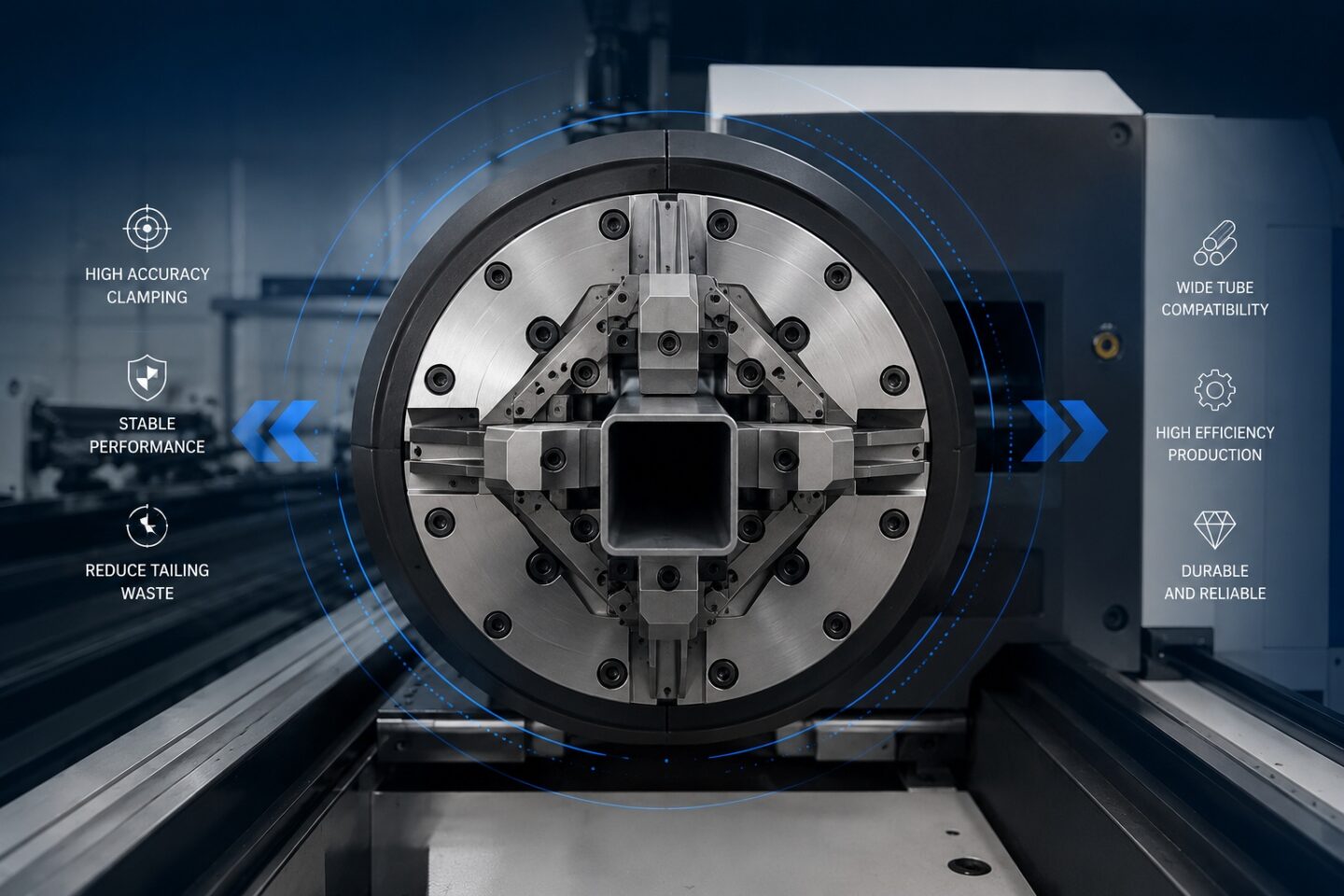
A tube laser chuck is one of the most important mechanical components in a laser tube cutting machine. It holds, rotates, positions, and supports the tube during cutting. For factory buyers, the chuck system can directly affect cutting accuracy, clamping stability, tailing waste, and long-term production efficiency.
However, many buyers compare laser power, machine size, and automation level when selecting a tube laser cutter. These factors are important, but the chuck system should not be ignored. If the tube is not clamped firmly, even a powerful laser source and advanced control system may fail to deliver stable results.
As a result, for manufacturers processing round tubes, square tubes, rectangular tubes, and shaped profiles, the right chuck configuration can help reduce positional deviation, improve hole accuracy, and reduce material waste.
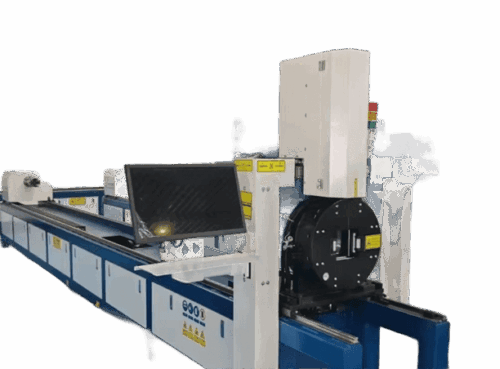
A tube laser chuck is the clamping and rotating mechanism used in a laser tube cutting machine. It grips the metal tube and works with the machine’s feeding, rotating, cutting, and CNC control systems.
In tube cutting, the workpiece is not a flat sheet. It may be round, square, rectangular, oval, or irregular. During cutting, the tube may need to rotate, move forward and backward, or remain stable while holes, slots, angles, and profiles are cut.
The chuck must keep the tube centered and secure during this process.
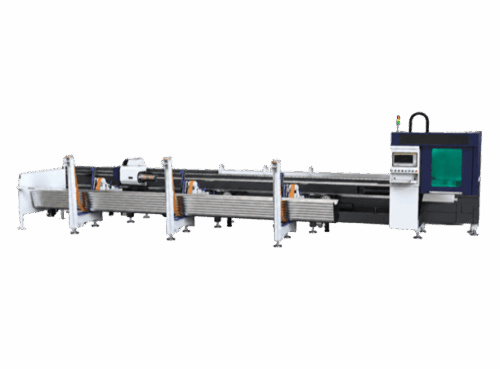
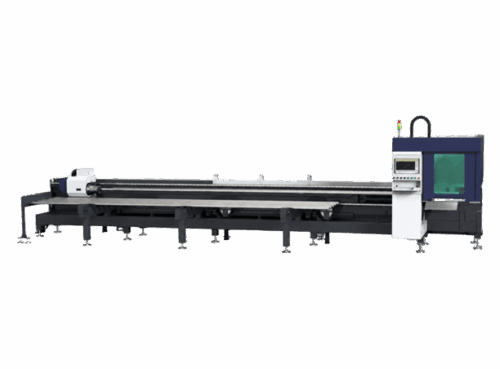
A typical laser tube cutting machine may use manual, semi-automatic, or fully automatic loading. Depending on the machine configuration, it may use two, three, or four chucks to support different tube lengths, diameters, weights, and production requirements.
For buyers, the key point is simple: the chuck is not only a holding device. It is part of the accuracy system.
Tube laser cutting requires stable positioning. If the tube slips, vibrates, or shifts during cutting, the final part may show hole deviation, uneven slots, poor angle cuts, or inconsistent profile accuracy.
This is especially important when cutting:
Chuck stability affects concentricity and repeatability. When the tube rotates, the chuck must hold it firmly without excessive deformation. For thin-wall tubes, too much pressure may damage the material. For heavy tubes, insufficient clamping force may cause slipping.
A well-designed tube laser chuck balances clamping force, rotation stability, and tube protection.
This is why buyers should evaluate the chuck system together with laser power, cutting head, CNC control, machine bed, and loading system.
A double chuck laser tube cutting machine is suitable for many standard tube cutting applications. It can handle common round, square, and rectangular tubes. For small and medium-sized workshops, this configuration often provides a practical balance between cost and performance.
Meanwhile, a three chuck tube laser cutting machine offers stronger support for longer tubes or higher material-saving requirements. Because the additional chuck improves tube control, it can help reduce tailing waste and improve feeding stability.
In contrast, a four chuck tube laser cutter is usually used for heavier-duty applications. It is more suitable for long tubes, large-diameter profiles, thick-wall tubes, and high-stability cutting requirements.
Therefore, buyers should choose based on real production needs rather than only machine appearance. Tube length, diameter, weight, wall thickness, accuracy requirements, and daily production volume all matter.
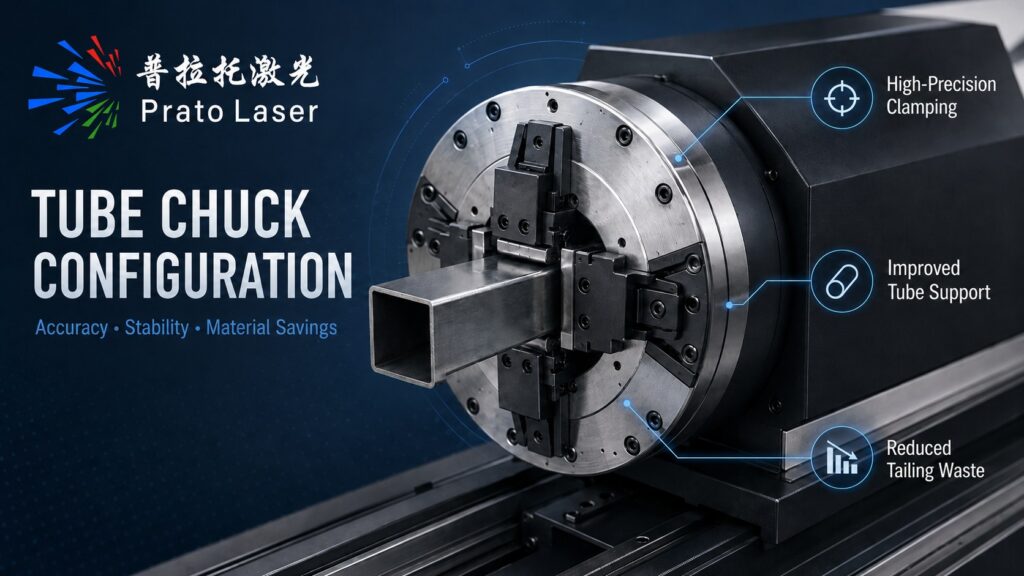
Tailing waste is a hidden cost in tube cutting. If each tube leaves a long unused section, material loss can become significant over time. This is especially true when processing stainless steel tubes, aluminum profiles, carbon steel pipes, and decorative metal tubes.
For example, a better chuck configuration can help reduce this waste. Precision chuck clamping improves tube control. In addition, front chuck over-travel or servo over-travel can help move the tube more efficiently during the final cutting stage. Some machine configurations can also support zero-tail or low-tail cutting.
As a result, factories can improve material utilization in batch production. Although the machine investment may be higher, the long-term savings can be meaningful for manufacturers with stable tube cutting demand.
A pneumatic chuck uses air pressure to clamp and release the tube. It is widely used because it is fast, mature, and suitable for many standard tube cutting applications.
A servo-controlled chuck or servo over-travel configuration provides more advanced motion control. It can improve feeding accuracy, reduce tailing waste, and support higher automation requirements.
For many factories, pneumatic chucks are enough for regular cutting. For higher efficiency, lower waste, or more demanding applications, servo configurations may be worth considering.
The practical difference is not only in the component itself. It is in how the chuck works with the whole machine.
A strong chuck system should match:
A good supplier should recommend the chuck system based on real tube specifications, not only by machine model name.
Tube laser chuck problems often appear as cutting quality problems.
Common issues include:
Some problems come from poor machine adjustment. Others come from wear, contamination, insufficient maintenance, or the wrong chuck configuration for the application.
For example, if a heavy round tube slips during rotation, the issue may be insufficient clamping force, worn jaws, or unsuitable chuck size. If a thin stainless steel tube is deformed, the clamping pressure may be too high or the contact area may be unsuitable.
Operators should not treat every cutting problem as a laser power problem. Many tube cutting problems are mechanical or process-related.
Chuck maintenance is important for stable long-term cutting performance.
A tube laser chuck works in a harsh environment. During cutting, metal dust, slag, oil, and fine particles may enter the clamping area. If these materials are not cleaned, the chuck may become less accurate or less responsive.
Basic maintenance should include:
Operators should follow the supplier’s maintenance schedule. Maintenance should be done with the machine powered down and according to safety procedures.
Factories should also train operators to recognize early warning signs. If the tube starts slipping, clamping feels uneven, or cutting holes begin shifting, the chuck system should be inspected before the problem becomes larger.
For machine safety, ventilation, laser hazards, and workplace protection, factory managers can also refer to OSHA laser safety guidance. For broader fabrication process knowledge, buyers can review industry information from The Fabricator.
A stable chuck system supports many tube cutting applications.
In metal furniture production, round and square tubes are often cut for frames, chairs, tables, shelves, and decorative structures. Accuracy affects welding and assembly.
In fitness equipment manufacturing, tubes must be cut consistently for frames, handles, supports, and load-bearing structures. Stable clamping helps maintain repeatability.
In automotive parts production, tube components may require holes, slots, and precise profiles. Cutting deviation can affect assembly quality.
For guardrail and handrail production, tube length and hole position consistency are important for installation.
Meanwhile, machinery manufacturing often uses tube cutting for frames, brackets, covers, and structural assemblies.
In addition, construction and steel structure projects may require bevel cutting and accurate tube profiles to improve welding preparation and assembly fit.
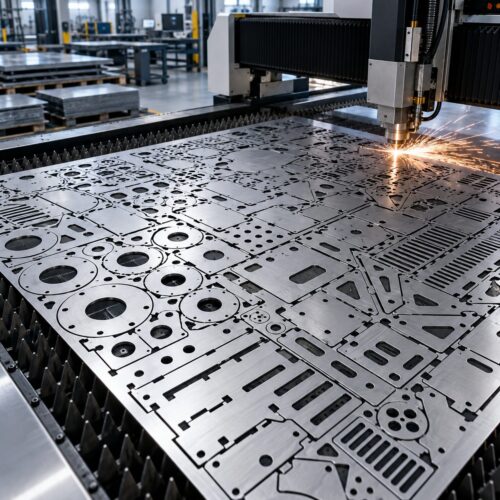
For factories that also process flat metal sheets, a fiber laser cutting machine or high-speed laser cutting machine may be used together with tube cutting equipment to build a more complete metal processing workflow.
Before purchasing a laser tube cutting machine, buyers should evaluate the chuck system carefully.
Important questions include:
Buyers should provide actual tube samples and drawings before machine selection. A supplier can only recommend the right chuck configuration when the tube size, wall thickness, material, and production volume are clear.
In addition, buyers should provide actual tube samples and drawings before machine selection. A supplier can only recommend the right chuck configuration when the tube size, wall thickness, material, and production volume are clear.
Also, sample cutting is strongly recommended. Real tests can show clamping stability, rotation smoothness, hole accuracy, edge quality, and tailing waste.
Prato Laser provides tube cutting solutions for different production scales, from flexible small-batch processing to higher-efficiency automated tube production.
The Prato Laser tube cutting machine range supports manual, semi-automatic, and fully automatic configurations. Depending on production needs, buyers can compare chuck size, loading method, zero-tail configuration, bevel cutting option, cutting power, and tube diameter range.
For buyers processing round tubes, square tubes, rectangular tubes, and selected shaped profiles, Prato Laser can help evaluate the right configuration based on tube drawings, material type, wall thickness, and production goals.
The key is not only buying a machine. It is choosing the right clamping, feeding, cutting, and support system for daily production.
Manufacturers with tube cutting projects can contact Prato Laser to discuss tube samples, chuck configuration, machine model selection, and application requirements.
One common mistake is choosing a tube laser cutter only by laser power. Power affects cutting capability, but it does not solve poor clamping or unstable feeding.
Another mistake is selecting a chuck size without checking the real tube range. If the chuck size is too small, the machine cannot process larger profiles. If the system is oversized for small tubes, cost and efficiency may not be ideal.
A third mistake is ignoring tailing waste. In batch production, long leftover tubes can create ongoing material loss.
Some buyers also underestimate maintenance. Chuck systems require regular cleaning and inspection. Without maintenance, even a good machine may lose accuracy.
The final mistake is skipping sample testing. A supplier demonstration on standard tubes may not represent the buyer’s actual materials, wall thickness, tube shapes, or part drawings.
Before choosing a tube laser chuck, buyers should compare the chuck system with real production needs. First, check the tube shape, diameter, length, and wall thickness. Next, confirm whether the machine needs double chuck, three chuck, or four chuck support. In addition, review the acceptable tailing length for batch production. For example, a furniture tube factory may care more about speed and cost, while a machinery manufacturer may need stronger support for heavier tubes. Therefore, sample cutting should be tested with real tubes and drawings. Also, ask whether spare jaws, pneumatic parts, and chuck maintenance support are available. Finally, choose the configuration that balances accuracy, material savings, automation, and budget.
A tube laser chuck has a direct impact on cutting accuracy, clamping stability, material utilization, and machine selection. For buyers comparing laser tube cutting machines, the chuck system should be evaluated as carefully as laser power, cutting head, CNC control, and machine structure.
A double chuck system may be suitable for common tube cutting. A three chuck system can offer stronger support and better material-saving potential. A four chuck system is more suitable for long, heavy, or demanding tube applications.
The best configuration depends on real production needs.
For factories producing metal furniture, fitness equipment, automotive parts, guardrails, machinery frames, and structural components, the right tube laser chuck can improve cutting consistency and reduce avoidable waste.
A tube laser chuck is the clamping and rotating mechanism that holds a tube during laser tube cutting. It helps keep the tube centered and stable while the laser cuts holes, slots, profiles, and angles.
If the chuck does not hold the tube firmly, the tube may slip, vibrate, or shift during cutting. This can cause hole deviation, poor profile accuracy, and inconsistent cutting quality.
A double chuck system is suitable for many standard tube cutting applications. For longer tubes, heavier tubes, or lower tailing waste requirements, three chuck or four chuck configurations may be better.
Zero-tail tube cutting is a configuration designed to reduce leftover tail material at the end of the tube. It helps improve material utilization in batch production.
A pneumatic chuck uses air pressure for clamping and releasing. A servo-controlled chuck or servo over-travel system offers more advanced positioning and feeding control for higher efficiency and reduced waste.
A worn chuck can cause slipping, poor centering, unstable clamping force, vibration, hole deviation, and reduced cutting accuracy.
Maintenance frequency depends on production volume, material type, and working environment. In regular industrial use, operators should clean and inspect the chuck frequently according to the machine supplier’s maintenance schedule.
Buyers should evaluate tube diameter, tube length, wall thickness, tube weight, cutting accuracy requirements, production volume, zero-tail needs, automation level, and budget.



English